

Lipari: beaches, what to see and how to get there
Discover how to plan an itinerary in Lipari, one of the most beautiful islands in the Aeolian archipelago.
When you ask yourself what to see in Lipari in one day, the answer inevitably involves a careful selection, because the temptation to circle the whole island, stringing together beach after beach and adding a hike on top, is strong but rarely compatible with the arrival and departure times of the boats; a sensible approach takes the landing time – often at Marina Lunga – as a reference and builds the day in concentric circles: historic centre and castle in the earlier hours, a walk down to Marina Corta, a stretch of coastal road towards Canneto or a panoramic viewpoint, and one carefully chosen beach, ideally less crowded and easier to reach in line with your energy and pace.
In the broader design of an itinerary on the island of Lipari, the timing of the trip also plays a role: a visit in late spring or early autumn allows you to enjoy the beaches with fewer crowds and to tackle walks with more comfort, whereas in high summer the heat and the concentration of visitors in the central hours push you towards cooler times of day and stretches of sea that can be reached by boat; deciding when to go matters as much as deciding what to see, especially if you move around without your own vehicle and rely on local buses or taxis.
Lipari town centre: what to see on foot
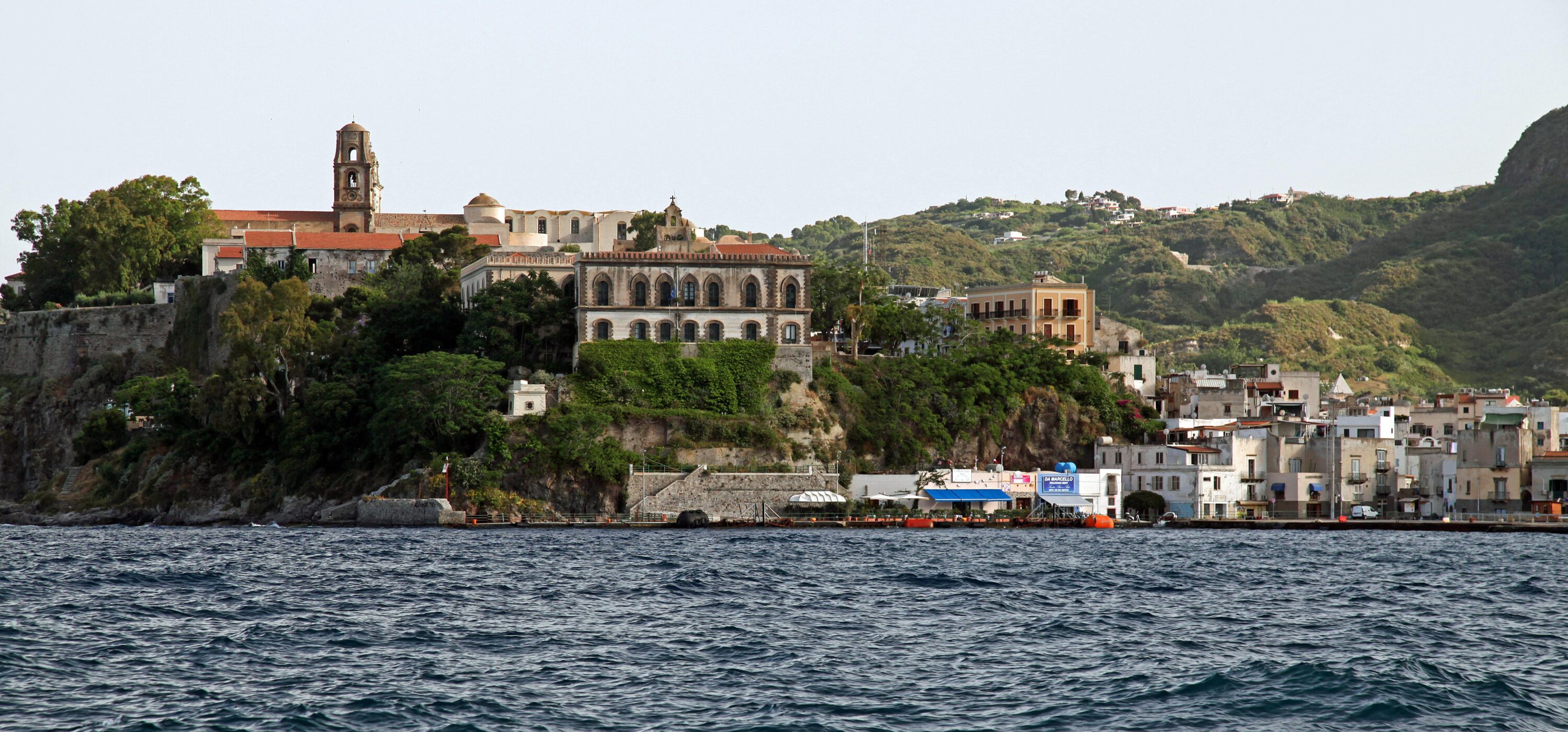
Walking off the boat at Marina Lunga and joining Corso Vittorio Emanuele, the lower part of Lipari’s town centre presents itself as a long, relatively narrow street lined with shops, bars and small stores that alternate between tourist-oriented products and elements of everyday life; following this axis on foot, heading towards Marina Corta, is an easy way to get a feel for the island without rushing, observing façades, the round windows typical of Aeolian architecture and the arches that connect one side of the street to the other.
The first key stop for anyone wondering what to see in Lipari on foot is the castle complex, which dominates the town from a lava outcrop and encloses within its walls the archaeological area and the Cathedral of San Bartolomeo; climbing up to the acropolis, passing through the fortifications and looking out over the remains of ancient settlements reveals the continuity of human presence in the Aeolian Islands, while a visit to the Archaeological Museum, for those with enough time, adds context through collections of prehistoric, Greek and Roman finds.
Dropping back down towards the sea, the small harbour of Marina Corta acts as a kind of urban living room, with its square opening onto the water, fishing boats and small excursion boats; behind it, a tangle of alleys combines residential houses, touches of street art and glimpses over the sea, giving a sense of how the town lives beyond the main street façade.
For visitors with only a few hours on the island, a walking route that includes Marina Lunga, the main street, the castle and Marina Corta covers the urban heart of Lipari, leaving room for a coffee or lunch break without the pressure of having to run from one side of the island to the other; in this framework, every detour to a side church, a stairway leading up towards the upper houses or an improvised viewpoint adds a detail that enriches the overall picture.
Beaches of Lipari and coastal stretches not to miss
When you talk about the beaches of Lipari, a clear distinction quickly emerges between areas that are easily reached by bus or a short transfer and those that require a little more logistical effort, often rewarded by a quieter atmosphere; for a single day, it makes sense to focus on one or two coastal stretches rather than trying to visit them all, taking into account the timings of your return to town.
The most popular and easiest beach to reach is Canneto, a long strip of pebbles and shingle about four kilometres from Lipari, served by buses and well equipped; the presence of bars and beach clubs makes it a good option for those looking for comfort, while the ends of the bay, such as the Calandra area, offer quieter sections, appreciated by visitors seeking slightly more secluded spaces for snorkelling and less crowded swims.
Continuing along the coastal road to the north, you reach Porticello, marked by the presence of the old pumice quarries, and the Acquacalda area, with its shingle shoreline and wide-open views over the other islands; this stretch, less built-up than Canneto, conveys more strongly the sense of an industrial landscape reclaimed by nature, where abandoned structures coexist with the sea and with new tourist uses of the territory.
On the opposite side, reached via more winding roads or by boats leaving from Marina Corta, Valle Muria beach is another often-mentioned spot, known for its dark sand and its position nestled between cliffs; in this case, deciding whether to include it in a one-day itinerary depends on your willingness to tackle steeper walks or to schedule a boat trip, always keeping an eye on the time needed to return to the main harbour.
A thoughtful visit to Lipari’s beaches, even when narrowing down the selection, allows you to read how the sea and extraction activities have shaped the coastline: floating pumice in Canneto, obsidian flows in the Rocche Rosse area and the different grain sizes of the shorelines are all details that, once you notice them, remain tied to your overall experience of the island.
What to see in Lipari in one day: suggested itinerary
When planning a full day focused on what to see in Lipari in one day, the main constraints are the ferry schedules to and from Milazzo or the other Aeolian islands, as well as the time of year; for those arriving in the morning and leaving in the late afternoon or evening, a practical structure is to alternate the historic centre, a viewpoint and an easily accessible beach.
One possible sequence begins with disembarkation at Marina Lunga and an ascent towards the castle and cathedral complex in the early hours of the day, when the light is still gentle and the heat less intense; visiting the bastions, the archaeological area and, for those interested, the museum will take up a good part of the morning, leaving time to walk back down to the main street, stop for a coffee and continue to Marina Corta, where a pause on the quay or in the square allows you to watch the comings and goings of boats and, if you wish, to book an afternoon boat excursion.
After lunch, your next choice depends on how you are getting around: those on foot and using buses can opt for Canneto, taking advantage of the frequency of services and how easy it is to get back, whereas those with a scooter or car can push on towards the more northern stretches of coastline or the viewpoints around Pianoconte or the observatory area, from which the views over Vulcano and the other islands give a three-dimensional sense of the archipelago.
For visitors who prefer to stay in a more “urban” context, an alternative is to devote the afternoon to a drive or scooter tour of the island, stopping at a few marked viewpoints and in one of the outlying villages, such as Acquacalda or Quattropani, to see Lipari from less obvious angles; this option, however, requires good time management and a certain familiarity with island roads, which alternate between panoramic stretches, curves and steep climbs in quick succession.
In all scenarios, the aim is not to tick off as many stops as possible, but to build a day that holds together town, sea and landscape, leaving room for unforeseen events, longer breaks and last-minute choices, which are often the ones that give a short trip its distinctive colour.
Island of Lipari: what to see among quarries, trails and viewpoints
Spending more than one day on Lipari, or wanting to go beyond the historic-centre-plus-beach combination, brings into focus a series of places that tell the island’s story in a different way, starting with the pumice and kaolin quarries that shaped both its economy and landscape for decades; the Monte Pilato, Fossa Castagna and Rocche Rosse area, with obsidian flows descending towards the sea, offers walking routes that cross vineyards, abandoned houses and stretches of coast marked by these geological layers.
Another frequently mentioned walking route connects the kaolin quarries to the San Calogero thermal baths, passing along the island’s north-western side: the path, which traverses a greener area with dry-stone walls, olive groves and rural dwellings, reveals a less touristy Lipari, where the relationship between humans and land passes through cultivated fields, hot springs and historic spa facilities, some of which are now partially restored.
On the south-western side, trails that run between San Salvatore, Monte Guardia and the area around the church of San Bartolo al Monte make it possible to combine hiking, visits to religious buildings and descents to Valle Muria beach, in an alternation of Mediterranean scrub, vineyards and cliffs plunging into the sea; here in particular, colonies of gulls and the chance to look out over views encompassing several islands give the experience a very different feel compared to urban walks.
These routes, although they require more time and at least basic preparation in terms of clothing and water, enrich the answer to the question of what to see on the island of Lipari, because they restore the link between geology, industrial history and contemporary use of the land, showing how the Aeolian Islands are not only beaches and historic centres but also a network of trails and landscapes that change character with light and season.
Best time to go to Lipari and practical considerations
When deciding on the best time to go to Lipari, the perspective changes significantly depending on whether the focus is on the sea, hiking or a mix of both; the windows from late May to mid-June and in September often offer a favourable balance of temperatures, crowd levels and availability of services, while July and August, although guaranteeing maximum availability of hydrofoils, excursion boats and accommodation, also bring higher prices, heavier traffic on the roads and more crowded beaches.
The winter period and late shoulder seasons, although less obvious choices for those who think of Lipari solely as a beach destination, have a particular appeal for visitors who enjoy walking, exploring the town centre and following trails: the lower sun, fewer people and the chance to observe island life outside peak tourist times provide a different image, where the relationship with the sea changes, but the sense of place acquires nuances that are difficult to pick up in August.
From a practical standpoint, beyond weather conditions, the ferry schedules to and from Milazzo and between the Aeolian islands matter, since they can change in case of strong winds or rough seas; organising what to see in Lipari in one day therefore always means keeping an eye on departures and arrivals, allowing a safety margin for your return and, if needed, considering an overnight stay on the island to stretch timings and options.
In any case, whether you come for a quick day trip or stay a full week, Lipari offers enough variety of settings for everyone to find their own balance between history, sea, walking and time spent in bars overlooking the square or harbour; what makes the difference, as so often happens, is how you spread out your stops and your willingness to take the extra few steps up a staircase or follow a side street that branches off the main route, letting the island itself suggest what to see, one step at a time.
Ciao Sono Iolanda, Nel 2010 ho deciso di ritornare nella mia magica isola, la Sicilia, affinchè l’esperienza acquisita negli anni precedenti prendesse forma lì dove ero nata.
Link Utili
Dove si trova
Come raggiungerla
Numeri utili
Mappa di Siracusa
Esperenze culinarie Sicilia

Cosa fare a Cefalù

Escursioni Etna
Cosa Vedere a Catania

canoli-ricotta-cheese

esperienze a taormina

Escursioni
VIVI LE PIU’ BELLE ESPERIENZE IN SICILIA, ABBIAMO SELEZIONATO PER VOI LE PIU’ BELLE ESCURSIONI PRESENTI IN SICILIA.

Alloggi
CERCHI UN HOTEL DI LUSSO, CASALI ESCLUSIVI, VILLA CON PISCINA O B&B? SCEGLI L’ALLOGGIO PIU’ ADATTO A TE

Noleggio auto
IL NOLEGGIO DI UN’AUTOMOBILE IN SICILIA È IL MODO MIGLIORE PER SCOPRIRE LE PRINCIPALI BELLEZZE DELLA REGIONE SENZA ALCUN VINCOLO

Noleggio scooter
NOLEGGIARE UNO SCOOTER IN SICILIA PERMETTE DI VIVERE UN’ESPERIENZA UNICA, UNA VACANZA RICCA DI RICORDI


