UNESCO Sites in Sicily: The 7 World Heritage Sites to Visit

UNESCO Sites in Sicily: The 7 World Heritage Sites to Visit

UNESCO Sites in Sicily: The 7 World Heritage Sites to Visit

Sicily currently has seven UNESCO World Heritage Sites that together span almost three thousand years of the island’s history, from the prehistoric necropolis of Pantalica to the Greek temples of Agrigento, from the mosaics of a Roman villa to the churches built under the Norman kings, all the way to the towns rebuilt in Baroque style after the earthquake of 1693. Alongside these cultural sites are two natural sites linked to volcanic activity, Mount Etna and the Aeolian Islands.

Let’s take a closer look at the seven UNESCO sites in Sicily you should visit!

Arab-Norman Palermo and the Cathedrals of Cefalù and Monreale

The Arab-Norman Palermo and the Cathedral Churches of Cefalù and Monreale site includes nine medieval buildings commissioned by the Norman kings at a time when Palermo was home to craftsmen from different cultures, Islamic, Byzantine and Latin, resulting in buildings with red domes, pointed arches and gold-background mosaics.

The UNESCO site includes the Cathedral, the churches of San Giovanni degli Eremiti, the Norman Palace and its Palatine Chapel, the churches of La Martorana and San Cataldo, the Zisa Castle and the Admiral’s Bridge. The monuments in Palermo’s historic centre can be reached on foot in a half-day walk, while for the Zisa, now home to a museum of Islamic art, and the Admiral’s Bridge it’s best to use public transport.

Monreale Cathedral can be reached by bus from Piazza Indipendenza and needs at least a couple of hours to see its famous mosaic-covered naves and the Benedictine cloister, while Cefalù Cathedral, with Christ Pantocrator in the apse, is less than an hour away by train.

Archaeological Area of Agrigento

The Valley of the Temples park preserves the remains of ancient Akragas, a Greek colony founded in the early 6th century BC on a ridge facing the sea, with a sequence of Doric sanctuaries that includes the Temple of Juno, the Temple of Concordia, almost intact thanks to its conversion into a church in the 6th century AD, and the Olympieion area with the remains of the telamons.

The main route is about two kilometres long with entrances at either end, and since there’s almost no shade it’s best to arrive at opening time or choose the evening openings offered in the summer months. To complete your visit you can add the Pietro Griffo Archaeological Museum, which displays the finds from the area, and the Kolymbethra Garden, an ancient citrus grove managed by FAI inside the park.

Villa Romana del Casale in Piazza Armerina

A few kilometres from Piazza Armerina, in the Enna hinterland, stands the Villa Romana del Casale, a large country residence built between the late 3rd and early 4th century AD, whose mosaic floors depict hunting scenes with exotic animals, chariot races, mythological episodes and young female athletes exercising.

The visit follows raised walkways that let you view the rooms from above without stepping on the mosaics and takes about two hours on average. The rooms are covered, so the site can be visited on rainy days too, while in summer it’s best to avoid the early afternoon, partly because it gets very hot under the roofs.

Syracuse and the Rocky Necropolis of Pantalica

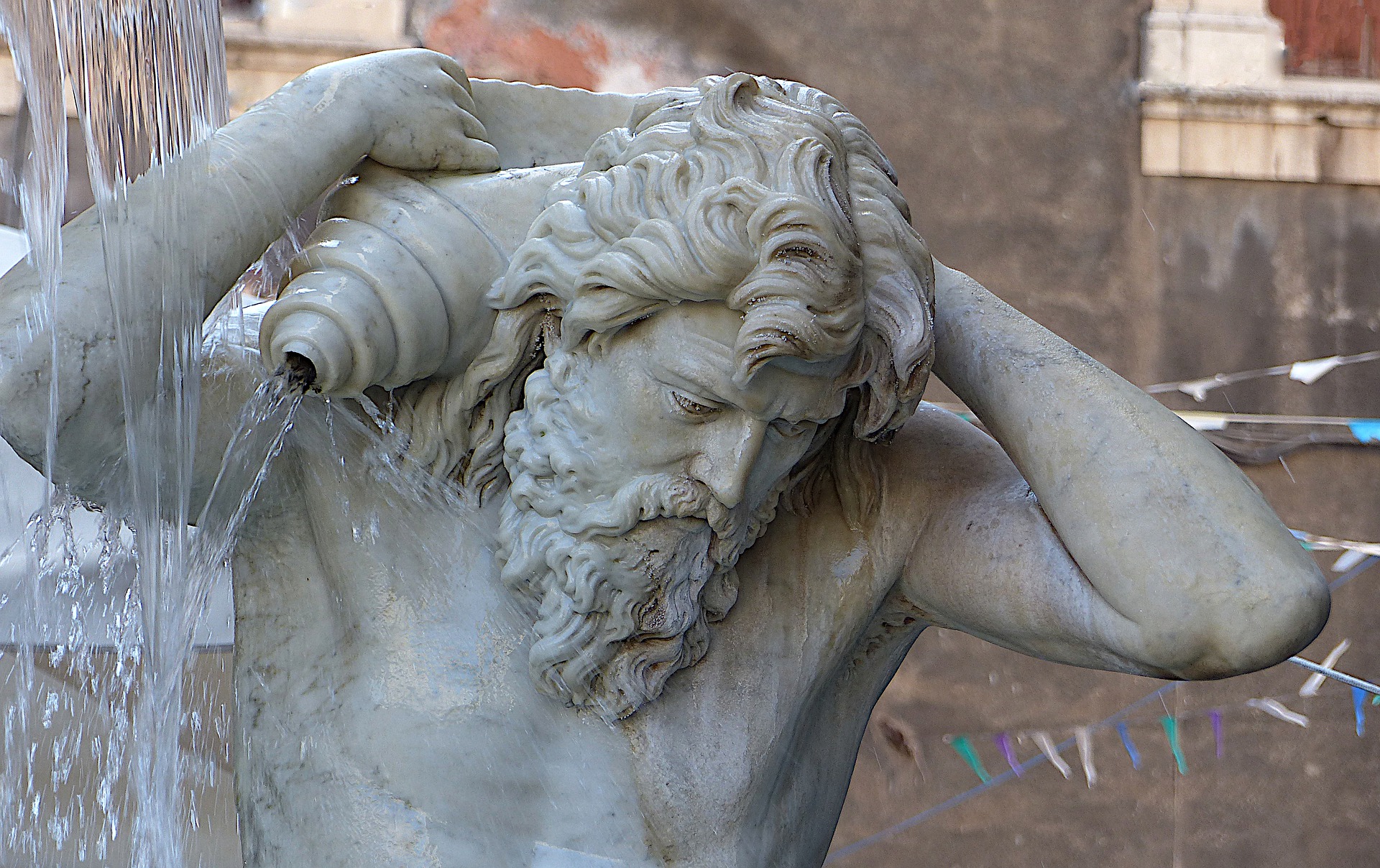
This site brings together two places about forty kilometres apart, starting with Syracuse and its island of Ortigia, which you really must explore on foot. While wandering the island you can reach the Cathedral, which still incorporates the columns of the Greek temple dedicated to Athena, and continue to the Fountain of Arethusa.

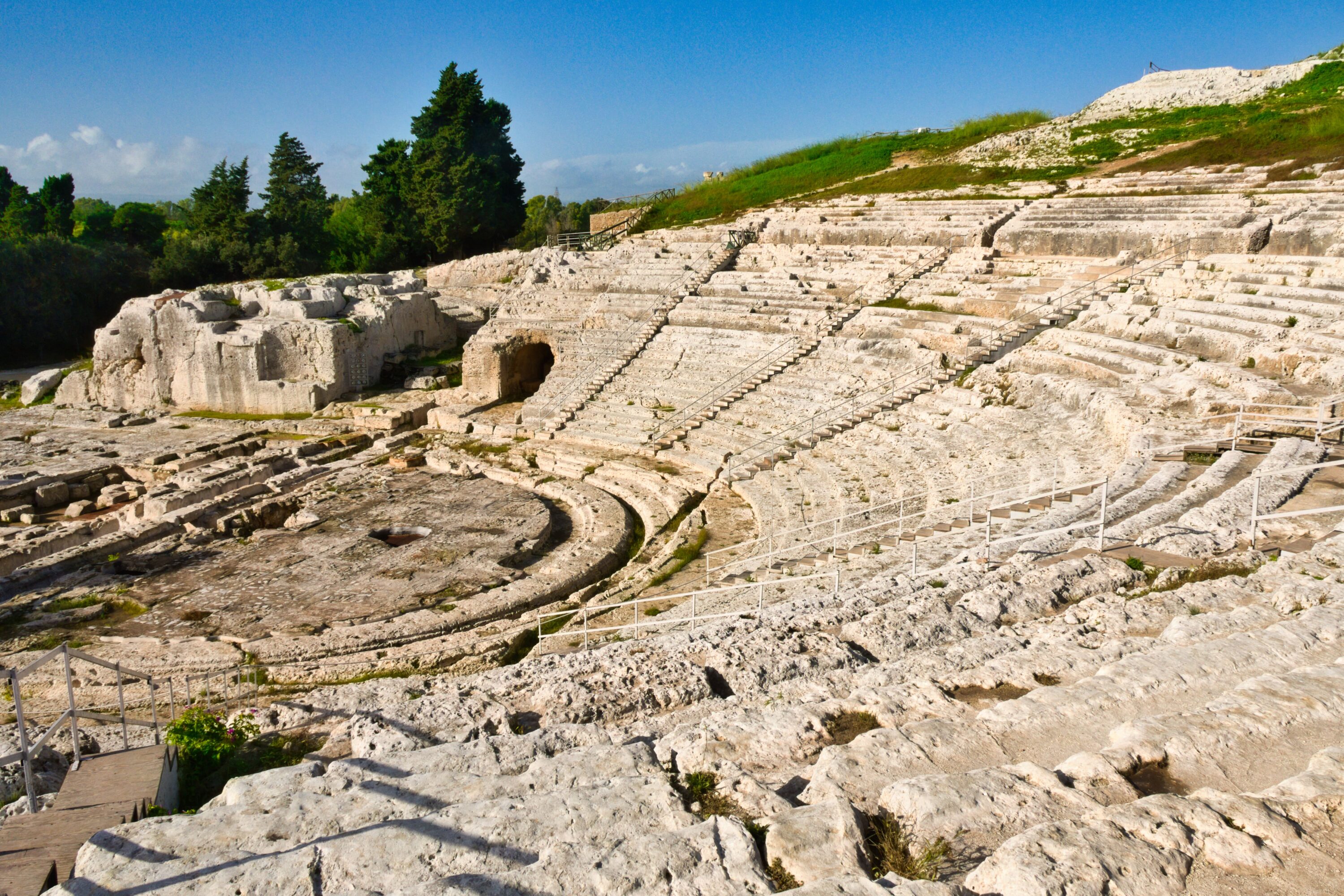
Another must-see is the Neapolis Archaeological Park, which includes the Greek Theatre, the latomie quarries and the Ear of Dionysius. Between May and July the theatre also hosts its season of classical plays, a chance to see it at its finest.

The Necropolis of Pantalica, between Sortino and Ferla, preserves thousands of prehistoric tombs carved into the limestone cliffs overlooking the Anapo and Calcinara valleys. There are two entrances, one from each town, and the visit is on foot along dirt trails with no facilities, so you’ll need comfortable shoes, ideally hiking boots, plenty of water and at least half a day.

Late Baroque Towns of the Val di Noto

The Late Baroque Towns listing covers eight towns that were rebuilt after the earthquake of 1693. The towns included in the UNESCO World Heritage Site are:

  • Catania
  • Modica
  • Caltagirone
  • Ragusa
  • Palazzolo Acreide
  • Noto
  • Militello in Val di Catania
  • Scicli

All these destinations share churches with elaborate Baroque façades, monumental staircases and palaces with balconies supported by corbels carved with grotesque faces and figures.

Each town is best explored on foot, focusing on the historic centre: in Noto the main street leads to the Cathedral and Palazzo Nicolaci, in Ragusa Ibla the Duomo of San Giorgio dominates the main square, in Modica the church of San Giorgio is reached by a long flight of steps, while in Caltagirone the Staircase of Santa Maria del Monte has risers decorated with ceramic tiles.

In many churches you can climb up to the domes or bell towers for a full view over the Baroque rooftops.

Visiting Mount Etna

The volcano was recognised for the scientific value of its eruptive activity, documented for centuries, and can be visited from two main access points, the south side from Rifugio Sapienza above Nicolosi and the north side from Piano Provenzana, near Linguaglossa.

From both you can go up by cable car, by 4×4 or on foot along trails among extinct cones and lava flows. To approach the summit craters you must be accompanied by authorised guides, and access may be restricted depending on the volcano’s activity, so it’s best to check before heading up.

Alternatively, you can choose mountain bike or quad excursions or a helicopter flight, remembering that even in summer it’s cold at altitude and you’ll need warm clothing and closed shoes.

Aeolian Islands

The archipelago was added to the UNESCO World Heritage List for its volcanic phenomena, studied by volcanologists from all over the world. It is made up of seven inhabited islands, which can be reached by hydrofoil or ferry from Milazzo.

Each island has a different landscape: Lipari with its pumice quarries, Salina with its Malvasia vineyards, small and rocky Panarea, and Vulcano, known for its dark beaches and fumaroles. Stromboli, on the other hand, is the island where volcanic activity is easiest to observe, especially after sunset, either from the sea on boat trips beneath the Sciara del Fuoco or from the trails, where access to the higher altitudes is regulated by local ordinances and requires a guide.
siti UNESCO Sicilia

Ciao Sono Iolanda, Nel 2010 ho deciso di ritornare nella mia magica isola, la Sicilia, affinchè l’esperienza acquisita negli anni precedenti prendesse forma lì dove ero nata.

Link Utili

Dove si trova
Come raggiungerla
Numeri utili
Mappa di Siracusa
 

Escursioni in sicilia

Escursioni

VIVI LE PIU’ BELLE ESPERIENZE IN SICILIA, ABBIAMO SELEZIONATO PER VOI LE PIU’ BELLE ESCURSIONI PRESENTI IN SICILIA. 

Alloggi in Sicilia

Alloggi

CERCHI UN HOTEL DI LUSSO, CASALI ESCLUSIVI,  VILLA CON PISCINA O B&B? SCEGLI L’ALLOGGIO PIU’ ADATTO A TE

noleggio auto sicilia

Noleggio auto

IL NOLEGGIO DI UN’AUTOMOBILE IN SICILIA È IL MODO MIGLIORE PER SCOPRIRE LE PRINCIPALI BELLEZZE DELLA REGIONE SENZA ALCUN VINCOLO

noleggio scooter sicilia

Noleggio scooter

NOLEGGIARE UNO SCOOTER IN SICILIA PERMETTE DI VIVERE UN’ESPERIENZA UNICA, UNA VACANZA RICCA DI RICORDI

valle dei templi
Mount Etna Villages: The Most Beautiful to Visit

Mount Etna Villages: The Most Beautiful to Visit

Mount Etna Villages: The Most Beautiful to Visit

Non perderti un’esperienza unica, vieni con noi alla scoperta dei borghi dell’Etna, uno più bello dell’altro!

If you’re planning a trip to eastern Sicily and have a hike on Mount Etna in mind, I’d suggest setting aside at least a couple of days to explore the villages around the volcano too, because almost all of them are built from the lava stone of past eruptions and have churches, squares and local dishes that make each one unique.

To visit the Mount Etna villages you’ll need a car, since public transport between towns is limited and runs at inconvenient times, and the ideal route is to circle the volcano starting from the south side, heading north and finishing in the west with Bronte. In three days you can visit all the villages at a relaxed pace and enjoy a truly unique experience. If you don’t have that much time, you can simply pick the ones that interest you most.

In this guide we’ve also included Castelmola and Savoca, two towns in the province of Messina that are part of the Borghi più belli d’Italia (Most Beautiful Villages in Italy) association and offer a great view of Etna, even though they aren’t actually on the slopes of the volcano.

The most beautiful Mount Etna villages to visit

Etna, or ‘A Muntagna as locals call it with respect and affection, has shaped the landscape, history and soul of eastern Sicily for thousands of years, and around its slopes lie extraordinary villages set among dark lava stone, ancient chestnut and Corsican pine forests, heroic vineyards and panoramic squares overlooking the Ionian Sea.

From the gateways to the summit craters to medieval lanes and towns loved by artists and film directors, here are our tips for discovering the most beautiful villages to visit around Etna, between nature, art and unforgettable flavours.

Nicolosi: the gateway to Etna and its historic craters

The first stop for anyone wanting to explore the southern side of the volcano, Nicolosi is considered the true “gateway to Etna”: from here the scenic road winds up to Rifugio Sapienza, the starting point for the cable car and for guided hikes to the summit craters. Before heading up to higher altitudes, it’s worth stopping at the Monti Rossi nature reserve, two inactive craters formed during the devastating eruption of 1669, now covered by thick pine forest and crossed by easy trails that are perfect for families too. The town is also home to the Etna Park Authority, housed within the walls of the seventeenth-century Monastery of San Nicolò l’Arena.

Discover our Etna cable car tour!

Linguaglossa: ancient pine forests, murals and snow

On the north side of the volcano you’ll find Linguaglossa, a popular winter resort for those heading to the ski slopes of Piano Provenzana, but just as appealing in summer for anyone looking to cool off in the Ragabo Pine Forest. This monumental forest of Corsican pines (a native species with very tall crowns) offers miles of trails in an almost Alpine atmosphere.

The historic centre of Linguaglossa is pleasant to explore on foot, and in the Chiesa Madre you can see a precious eighteenth-century carved wooden choir, but the village’s real distinguishing feature is its murals, a network of street art works painted on house façades since the 1990s that tell, with colour and imagination, the story of daily life and the townspeople’s close relationship with Etna.

Zafferana Etnea: the scent of honey and terraces over the sea

Along the eastern side, the road to Zafferana Etnea invites an interesting detour to Pedara to admire the striking dark basalt geometry of the Basilica of Santa Caterina d’Alessandria. Continuing on, you reach one of the most productive villages in Sicilian beekeeping tradition, and beyond, since it is known for supplying on its own a significant share of Italy’s honey. While autumn turns the town’s streets into the stage for the Ottobrata, a lively Sunday fair showcasing chestnuts, grape must and forest produce, for the rest of the year the atmosphere is peaceful and timeless.

All the village lanes seem to lead to Piazza Belvedere, a true balcony from which the view stretches unobstructed from the Gulf of Catania to the coast of Calabria. No visit is complete without a food stop: in the bakeries and pastry shops of the centre, be sure to order the famous siciliana, a crisp fried calzone filled with tuma cheese and anchovies, along with a bag of sciatori, traditional biscuits coated in a rich dark chocolate glaze.

Randazzo: the black town with medieval charm

Heading up along the northern edge you arrive in Randazzo, historically the most intact and evocative village in the whole area. Known as the “black town” because its buildings are made entirely of dark lava stone, Randazzo preserves a unique medieval layout, historically divided into three quarters (Greek, Latin and Lombard), each with its own mother church and traditions.

Among its landmark monuments are the Cathedral of Santa Maria Assunta, an imposing example of Gothic-Norman architecture, the Church of San Martino with its slender fourteenth-century bell tower, and the Church of San Nicolò. Right in front of the latter stands the famous and enigmatic statue known as “Randazzo Vecchio” (or Piracmone), an allegorical sculpture of a naked man with a lion and an eagle, linked to local mythological and alchemical legends. To round off your visit, nothing beats a romantic stroll along Via degli Archi, the most photographed corner of the historic centre.

Milo: songwriters and fine wines

Not far away, nestled at over seven hundred metres among dense chestnut woods, lies Milo. Despite its small size, with only about a thousand residents, this little town has an extraordinary cultural appeal: this is where Franco Battiato chose to live for decades in his home, Villa Grazia, and where Lucio Dalla spent long periods among nature and the vineyards he owned. As a tribute to this deep bond, Piazza Belvedere features a bronze sculpture depicting the two masters of Italian music.

Milo’s territory also holds a wine treasure: it is the only municipality entitled to produce Etna Bianco Superiore DOC, a wine with a distinctive mineral profile made from Carricante grapes. Wine lovers will find the historic cellars of the village the perfect setting for a guided tasting, especially during the autumn harvest.

Maletto: the village of heights and strawberries

On the way west, climbing to almost a thousand metres above sea level, you come to Maletto, the highest municipality in the Etna area. The village is famous throughout Sicily for growing the Maletto strawberry, a particularly sweet and fragrant variety celebrated every year between late May and June with a long-standing village festival. Maletto is also an ideal base for mountain trekking enthusiasts: from here trails lead to the extinct craters and lava tube caves of the western side, such as the Monte Scavo area.

Bronte: the home of pistachios and the Nelson legacy

Continuing south-west you reach Bronte, famous worldwide for Sicily’s green gold: the Bronte Green Pistachio DOP. Grown on the sciara (rocky lava terrain), it is harvested by hand every other year. The popular Pistachio Festival (between late September and early October) draws thousands of visitors, so it’s best to visit early in the morning or on a weekday.

The historic centre is home to the Chiesa Madre della Santissima Trinità and the Real Collegio Capizzi, an eighteenth-century institution with an ancient library full of precious manuscripts. About 10 kilometres from the centre, towards Maniace, stands Nelson’s Castle (the former Abbey of Santa Maria di Maniace), an imposing monumental complex given by the Bourbons to the English Admiral Horatio Nelson in 1799, now set in a lovely park open to visitors.

Discover: Bronte pistachio tour, exploring one of Sicily’s signature products

Castelmola: the eagle’s nest above Taormina

Although it sits slightly apart from the Etna loop itself, Castelmola is an important stop for its matchless view of the volcano. Perched over 500 metres high right above Taormina, this small village, listed among the “Most Beautiful Villages in Italy”, is easy to reach from the motorway.

After leaving your car at the entrance to the town, walk up to the remains of the Norman castle: from this vantage point you can see the majestic bulk of Etna on one side and the bay of Giardini Naxos, Isola Bella and the Ancient Theatre of Taormina on the other. Before moving on, a stop in the main square is a must to taste the famous almond wine, a local elixir invented here in the early twentieth century.

Savoca: cinema, history and mummies in the Godfather village

Less than half an hour from Castelmola lies Savoca, a medieval village perched on a rocky hill surrounded by citrus groves. The town owes much of its international fame to Francis Ford Coppola, who shot famous scenes of The Godfather here in 1971. Every visitor’s starting point is the iconic Bar Vitelli, still open in Palazzo Trimarchi, where memorabilia and historic photos from the set are on display.

Beyond its film appeal, Savoca has an exceptional historical heritage: it’s worth climbing up to the Church of San Nicolò, perched on a rocky spur, and visiting the crypt of the Capuchin Convent, which preserves the mummified bodies of local notables and clergy dressed in period clothing from the seventeenth to the nineteenth century.

Read also: Film locations in Sicily, an itinerary between cinema and landscape

How to plan your itinerary and when to go

The best times for this trip are spring, from April to June, and autumn, between September and the end of October. In spring, blossoms create a spectacular colour contrast with the dark stone and temperatures are ideal for long walks, while in autumn the woods take on warm tones and the villages come alive with a packed calendar of festivals dedicated to honey, chestnuts, wine and pistachios.

In summer, the higher villages such as Maletto, Randazzo and Linguaglossa offer a pleasant escape from the heat of the coast, while in winter the snow above a thousand metres transforms the landscape but means you should check road conditions carefully before setting off.

When planning where to stay, you can choose a fixed base on the southern or eastern side, such as Zafferana Etnea or Nicolosi, ideal for exploring the crater area and the honey villages, combined with a stop in Randazzo to discover the northern and western sides at leisure. If you decide to extend the tour with the scenic detours to Castelmola and Savoca, the smartest choice is to spend a couple of nights in or around Taormina.

borghi dell'Etna

Ciao Sono Iolanda, Nel 2010 ho deciso di ritornare nella mia magica isola, la Sicilia, affinchè l’esperienza acquisita negli anni precedenti prendesse forma lì dove ero nata.

Link Utili

Dove si trova
Come raggiungerla
Numeri utili
Mappa di Siracusa


Escursioni in sicilia

Escursioni

VIVI LE PIU’ BELLE ESPERIENZE IN SICILIA, ABBIAMO SELEZIONATO PER VOI LE PIU’ BELLE ESCURSIONI PRESENTI IN SICILIA. 

Alloggi in Sicilia

Alloggi

CERCHI UN HOTEL DI LUSSO, CASALI ESCLUSIVI,  VILLA CON PISCINA O B&B? SCEGLI L’ALLOGGIO PIU’ ADATTO A TE

noleggio auto sicilia

Noleggio auto

IL NOLEGGIO DI UN’AUTOMOBILE IN SICILIA È IL MODO MIGLIORE PER SCOPRIRE LE PRINCIPALI BELLEZZE DELLA REGIONE SENZA ALCUN VINCOLO

noleggio scooter sicilia

Noleggio scooter

NOLEGGIARE UNO SCOOTER IN SICILIA PERMETTE DI VIVERE UN’ESPERIENZA UNICA, UNA VACANZA RICCA DI RICORDI

valle dei templi
Winter in Sicily: Things to Do, Places to Visit and Events

Winter in Sicily: Things to Do, Places to Visit and Events

Winter in Sicily: Things to Do, Places to Visit and Events

Have you ever thought about visiting Sicily in winter? This region can be explored at any time of year, and even the colder months have their advantages: temperatures along the coast remain mild, ranging between 9 and 16 degrees Celsius in some months, while rainy days are mainly concentrated between December and January, leaving plenty of sunny spells. Archaeological sites and historic centres can also be visited without queues and without the summer heat that can make even a simple walk exhausting after ten in the morning. Winter is also considered the low season, so accommodation costs less, often around half the price of August, while restaurants return to serving a clientele made up mainly of locals.

From December to March, the island also hosts a wide range of festivals and events, from living nativity scenes set up inside caves to patron saint celebrations and papier-mâché carnivals. The ski season on Mount Etna and in the Madonie usually begins between January and February, although snowfall varies from year to year. It is the perfect time if you can ski and would like to enjoy a unique experience on Mount Etna.

Art Cities and Baroque Towns: Where to Go in Sicily in Winter

If you are looking for a convenient and well-connected base, Palermo is a perfect choice during the winter months. In the city, the Palatine Chapel inside the Norman Palace, with its Byzantine-style mosaics and wooden muqarnas ceiling of Fatimid craftsmanship, is easier to visit when tourist numbers are lower. The same applies to Monreale Cathedral, where the mosaic cycle covers more than six thousand square metres and deserves plenty of time to be properly appreciated. In the historic markets of Ballarò and Capo, everyday life takes precedence over folklore in winter, and street food such as pane con la milza, sfincione and panelle can be enjoyed standing up without the evening crowds of the warmer season.

On the eastern side of the island, Catania offers a historic centre rebuilt in lava stone after the earthquake of 1693 and recognised by UNESCO together with the other towns of the Val di Noto. The Benedictine Monastery, now home to the university, can be visited with guides who explain its different historical layers, from the lava flow of 1669 to Vaccarini’s 18th-century project. From Via Etnea, on clear December days, the snow-covered cone of Mount Etna appears at the end of the avenue.

Heading south-east, you can discover Sicily’s Baroque heritage. By visiting Ragusa Ibla, you can walk down from the upper town along the Santa Maria delle Scale staircase, reaching the Cathedral of San Giorgio, designed by Rosario Gagliardi, and then the Ibleo Gardens. In Modica, around twenty kilometres away, you can stroll along Corso Umberto I and visit the town’s two elevated mother churches. Finally, there are Noto and Syracuse. Noto is known for its limestone palaces, which take on a golden hue in the low light of winter afternoons. Syracuse will leave you amazed by the island of Ortigia and its distinctive cathedral, which incorporates the columns of the Temple of Athena. Don’t miss a visit to the market on Via Trento, open throughout the year.

Skiing in Sicily: Mount Etna, the Madonie and Winter Sports

Contrary to what many people imagine, Sicily has been a skiing destination for decades, with two distinct ski areas. The first is located on the northern side of Mount Etna, above Linguaglossa, in the Piano Provenzana area. It extends from around 1,800 to 2,300 metres above sea level, with lifts climbing the slopes rebuilt after the 2002 eruption and runs winding through larch forests, with views stretching as far as the sea and the Ionian coast.

On the southern side, above Nicolosi, Rifugio Sapienza is the starting point at an altitude of 1,900 metres. Here, the landscape is almost devoid of vegetation and consists of volcanic sand and lava blocks, partially covered by snow in winter. The cable car climbs towards 2,500 metres, where excursions with alpine and volcanological guides continue by off-road vehicle towards the summit crater area when conditions allow. The main activities in this area are ski touring and snowshoeing, thanks to the gentle and regular slopes and the absence of woodland.

In the Madonie Park, Piano Battaglia is the main winter sports destination in western Sicily, at around 1,600 metres between the municipalities of Petralia Sottana and Isnello. The environment here is completely different, with beech forests, karst sinkholes, high-altitude grasslands and the presence of Abies nebrodensis, the Nebrodi fir, which survives in only a few dozen specimens. The slopes are suitable for beginners and families, and equipment rental is available on site. On days when there is not enough snow, hiking trails in the Geopark towards Piano Zucchi, the Monte Cervi Nature Reserve and the village of Isnello, home to the GAL Hassin astronomical observatory, can still be explored.

Nativity Scenes, Patron Saint Festivals and Carnivals: Sicily’s Winter Events

During the Christmas period, the province of Trapani hosts two events that can make your winter trip to Sicily truly magical. In Custonaci, inside the Scurati caves, natural cavities that once housed a prehistoric settlement and later a rural village inhabited until the years following the Second World War, a living nativity scene takes place with more than one hundred and fifty performers recreating traditional crafts inside stone houses built against the rock face. Access is from the town centre, with a shuttle service and an inexpensive ticket. Not far away, Erice sets up a widespread nativity scene exhibition throughout its maze of medieval courtyards and narrow streets, accompanied by bagpipe concerts and artisan markets.

In February, Catania comes to a standstill for the Feast of Saint Agatha, one of the most crowded religious celebrations in Europe. From the 3rd to the 5th of the month, devotees dressed in white robes pull the fercolo, the saint’s ceremonial carriage, along a route that winds for several kilometres through the city. They are preceded by the candelore, large wooden votive structures carried on the shoulders of representatives from the city’s trade guilds. If you are planning to be in Catania during those days, you should book well in advance.

The carnival season centres around two towns. In Acireale, the tradition of papier-mâché is combined with flower-covered floats, mechanical structures decorated with fresh flowers that parade through the Baroque town centre alongside allegorical floats. Admission to the parades is charged, with multi-day passes available. In Sciacca, on the Agrigento coast, the procession begins with the arrival of Peppe Nappa and continues with satirical floats accompanied by masked groups performing texts in dialect about local and national current affairs.

What to Do in Sicily in Winter: Cooking Classes and Homemade Pasta

Among the activities that make a trip to Sicily interesting during the colder months, cooking workshops hold a special place. They take place indoors, and winter is also the season for some of the island’s finest ingredients: citrus fruits at the peak of ripeness, fresh sheep’s ricotta, Sicilian purple cauliflower, wild fennel and freshly pressed olives. Cooking classes are held in private homes in the historic centres of Palermo and Catania, in farmhouses in the Ibleo hinterland and in rural estates around Marsala. They usually last between three and five hours and involve small groups, often of no more than eight people.

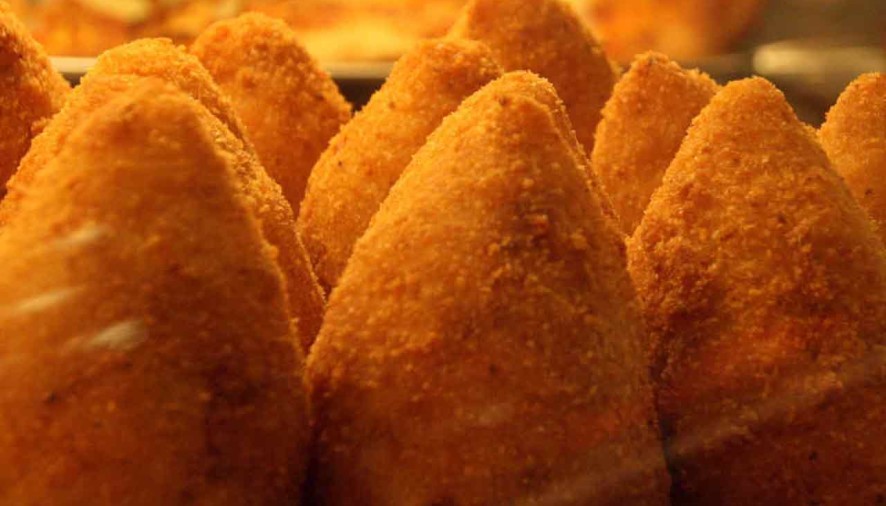
A typical experience begins with a trip to the market with the cook, a practical step that teaches you how to recognise fresh oily fish and different varieties of citrus fruit. It then continues with the preparation of three or four dishes, which are later enjoyed together at the table with house wine. Popular recipes include winter-style eggplant caponata with celery and Pantelleria capers, sarde a beccafico, pasta with sardines and wild fennel, swordfish rolls and arancine, whose frying technique is difficult to master simply by watching a video.

A separate part of the experience is dedicated to homemade pasta. In Sicily, remilled durum wheat semolina is traditionally worked with water only, without eggs, and every area has its own pasta shapes. Busiate from the Trapani area are rolled around a buso, traditionally a stem of ampelodesmos or a thin metal rod, and are served with Trapani-style pesto made with almonds, tomatoes and basil. In the Ragusa area, cavatelli and maccheroni al ferretto are produced, while in the Palermo area, gnocculi are prepared. During dedicated workshops, you will learn how to adjust the hydration of the dough, let it rest covered and shape the pasta by hand, taking home a technique that can be repeated with any type of semolina.

Wine Tastings, Almond Biscuits in Erice and Chocolate Tours in Modica

Winter winery visits take place during the pruning and ageing period, when producers are often more available for conversation and groups tend to be smaller. On Mount Etna, in the municipalities of Castiglione di Sicilia, Randazzo and Milo, tastings focus on wines from the local denomination, made with Nerello Mascalese and Nerello Cappuccio for reds and Carricante for whites. The vineyards grow on lava-stone terraces between 600 and 1,000 metres above sea level, often with ungrafted vines trained as traditional bush vines, where phylloxera never took hold. In the Ragusa area, you can taste Cerasuolo di Vittoria, Sicily’s only DOCG wine, made by blending Nero d’Avola and Frappato. In Marsala, historic wineries offer visits to the traditional bagli and ageing cellars, explaining the differences between Vergine, Superiore and Fine styles.

In Erice, convent confectionery has left behind a rich and still thriving tradition centred on almonds. In the town’s pastry shops, you can taste cream-filled genovesi, mustazzoli, sospiri and, above all, almond biscuits, made with peeled almonds, sugar and egg white and flavoured with lemon zest or cinnamon. Guided tastings may include pairings with Passito di Pantelleria or Marsala wine, while some shops also demonstrate the piping process with a pastry bag, which creates the biscuit’s distinctive rippled surface.

In Modica, chocolate tours introduce visitors to a cold-processing method of Spanish origin. The cocoa paste is mixed with sugar at temperatures below 50 degrees Celsius, allowing the sugar crystals to remain intact and noticeable when eaten. Shops along the main street organise visits to their workshops, with tastings of chocolate flavoured with cinnamon, vanilla and chilli pepper. In December, the city also dedicates an event to this traditional product, with tastings and demonstrations open to the public.

inverno in Sicilia

Ciao Sono Iolanda, Nel 2010 ho deciso di ritornare nella mia magica isola, la Sicilia, affinchè l’esperienza acquisita negli anni precedenti prendesse forma lì dove ero nata.

Link Utili

Dove si trova
Come raggiungerla
Numeri utili
Mappa di Siracusa


Escursioni in sicilia

Escursioni

VIVI LE PIU’ BELLE ESPERIENZE IN SICILIA, ABBIAMO SELEZIONATO PER VOI LE PIU’ BELLE ESCURSIONI PRESENTI IN SICILIA. 

Alloggi in Sicilia

Alloggi

CERCHI UN HOTEL DI LUSSO, CASALI ESCLUSIVI,  VILLA CON PISCINA O B&B? SCEGLI L’ALLOGGIO PIU’ ADATTO A TE

noleggio auto sicilia

Noleggio auto

IL NOLEGGIO DI UN’AUTOMOBILE IN SICILIA È IL MODO MIGLIORE PER SCOPRIRE LE PRINCIPALI BELLEZZE DELLA REGIONE SENZA ALCUN VINCOLO

noleggio scooter sicilia

Noleggio scooter

NOLEGGIARE UNO SCOOTER IN SICILIA PERMETTE DI VIVERE UN’ESPERIENZA UNICA, UNA VACANZA RICCA DI RICORDI

valle dei templi
Film Locations in Sicily: A Journey Through the Island’s Most Famous Sets

Film Locations in Sicily: A Journey Through the Island’s Most Famous Sets

Film Locations in Sicily: A Journey Through the Island’s Most Famous Sets

Scopri le migliori esperienze da fare in Sicilia, andando alla scoperta dei luoghi iconici che hanno ospitato pellicole nazionali e internazionali. 

Sicily is a place where you can enjoy unique experiences and also a destination where millions of travellers arrive every year to discover the settings of films shot across its cities, countryside and seaside towns, from a stop in one of the small village bars above Taormina, to taste a lemon granita in the very place where Michael Corleone asks for Apollonia’s hand, to the backdrops of major Italian and international television series.

The film locations in Sicily give you the chance to explore each destination with a different eye, reliving the settings that have made several pictures iconic over the years, also because the island with all its peculiarities has offered the camera unrepeatable environments ranging from historic centres, to aristocratic residences, to villages where time seems to have stood still.

In this guide we are going to discover the places that hosted productions far apart in period and genre, and for each area we look at the main sets together with the practical information you need to reach them and to recognise what the shooting altered compared to reality.

Palermo and Its Province: From the Baroque of The Leopard to Tornatore’s Bagheria

In 1963 Luchino Visconti brought Giuseppe Tomasi di Lampedusa’s novel to the screen and created the most sumptuous chapter of this map with The Leopard. The ballroom sequence was filmed over several weeks in the frescoed halls of Palazzo Valguarnera Gangi, in piazza Croce dei Vespri, a residence still inhabited by the family that owns it and open to visitors only on particular occasions. The summer home of the main characters was instead identified in an eighteenth century villa on the western outskirts of the city.

Donnafugata, the village that welcomes the Salina family in the novel, does not exist in the real place names of the island and took on the appearance of Ciminna, a hill town some forty kilometres from the regional capital, where the mother church appears in the thanksgiving scene and preserves the look it had back then. Filming in the city itself moved through the Kalsa district, piazza della Rivoluzione and the interiors of the church of the Gesù, places you can comfortably visit while you are in Palermo.

A century of history later and a few kilometres further east, Giuseppe Tornatore built a substantial part of his work around Palermo. Bagheria appears in several titles, from Cinema Paradiso (1988, Academy Award in 1990) to the sequences of Malèna (2000), and its eighteenth century villa decorated with grotesque figures is one of the most singular sets on the island, used by Marco Bellocchio as well in The Wedding Director (2006).

In the mountainous inland area of Palermo, Palazzo Adriano instead preserves the square that in the story of the boy and the projectionist stands for the centre of the imaginary town of Giancaldo in Cinema Paradiso. The fountain and the façades of the two churches facing the same space have remained unchanged, and the municipality has set up a small museum dedicated to the shooting. Other sequences of that film were shot in Cefalù, Castelbuono and Termini Imerese, while the ruins of Poggioreale, abandoned after the Belice earthquake, return in several of the director’s pictures as a landscape of decay.

The Godfather Villages Between Savoca and Forza d’Agrò

Around the saga of the Corleone family a misunderstanding has taken hold that has lasted for half a century, since the village that gives them their name appears in no shot at all: the production judged it too altered compared with the period of the story and looked elsewhere for villages able to convey the Sicily of the 1920s.

The choice fell on the villages perched behind Taormina, and Savoca became the place where Michael and Apollonia meet in The Godfather (1972). The bar that appears in the scene of the request to the girl’s father still exists, keeps its original sign and furnishings and still serves granita: it is the famous Bar Vitelli. The church where the wedding is celebrated is reached on foot along the lane that crosses the historic centre, and the full walk takes around an hour.

A short distance away, Forza d’Agrò provided the glimpses of the village seen from above and the stairway climbing towards the mother church, while the gorges carved by the Alcantara river, in the territory of Motta Camastra, appear in the exterior sequences. The third chapter of the saga, The Godfather Part III (1990), widened the shooting perimeter to include the Teatro Massimo in Palermo, where the closing sequence takes place, and an eighteenth century residence surrounded by citrus groves on the Fiumefreddo plain.

Those same Alcantara gorges returned to the screen in 2015 with Tale of Tales, the fantasy picture that Matteo Garrone presented at Cannes, setting the queen’s episode there. On the Etna side the volcano has supplied lunar landscapes to Italian and foreign productions for decades, from the costume films of the 1960s to the aerial shots of recent productions, and the road climbing towards the Sapienza refuge lets you reach by car altitudes where the panorama corresponds exactly to the one in the frames.

Film Locations in Sicily Among the Baroque of the Val di Noto

The area taking in Ragusa, Modica, Scicli and Noto has built up over the past thirty years a cinematic reputation intertwined with a televisual one, and the broadest phenomenon concerns precisely the small screen. The series Inspector Montalbano, adapted from Andrea Camilleri’s novels, placed the imaginary town of Vigàta in a geography that does not match the one in the books, spreading the inspector’s places between the town hall of Scicli, which houses the police station, and the seafront house at Punta Secca, now visited daily.

On the edge of Ragusa the castle of Donnafugata with its maze and its park appears in the same series and recurs in film productions of a very different kind, from Tale of Tales (2015) to costume dramas. The visit takes half a day and combines easily with the historic centre of Ragusa Ibla.

Twenty years earlier Tornatore had already brought the camera to this area for Cinema Paradiso (1988), the story of a fake talent scout travelling the island in search of faces to audition. Filming touched Ragusa, the mountain village of Monterosso Almo, the archaeological site of Morgantina in the province of Enna and the small harbour of Marzamemi, with the fishermen’s houses facing the square of the tuna fishery.

The stairways of Modica, the curved fronts of its churches and the narrow streets of the historic centre have hosted recent productions that take advantage of the compactness of the urban fabric, a condition that allows several settings to be filmed within a few hundred metres. The greatest advantage for anyone planning a film itinerary in this area lies in the short distances between the four main towns, which are easily reached by car.

Syracuse, Agrigento and the Southern Coast

With its pale paving and the baroque façade closing off the perspective, the cathedral square of Ortigia is probably the most photographed Sicilian urban setting in cinema. In 2000 the sequences of Malèna were shot there, the film starring Monica Bellucci in which the main character walks through the gaze of the townspeople, and filming extended as far as the seafront promenade, the inner streets of the island and some stretches of coast between Noto and Avola.

The same production took the camera to the limestone cliff sloping down towards the sea in the territory of Realmonte, a white terraced formation that has become the set of numerous pictures over the years and is now subject to access restrictions for conservation reasons, which are worth checking before planning your visit.

On the western coast, between Trapani and San Vito Lo Capo, the salt pans with their windmills and the beach of Macari appear in Everybody’s Fine (1990), the film by Giuseppe Tornatore with Marcello Mastroianni, whose character leaves the island to reach his children scattered across Italy. The sunset light on the basins remains one of the most recognisable landscapes on the Tyrrhenian side and draws photographers every evening along the road running beside the Stagnone lagoon.

In the inland area of Agrigento the birthplace of Luigi Pirandello and the clay landscape around Porto Empedocle recur in the adaptations of his works, while the Valley of the Temples has provided the backdrop for documentaries and for films set in classical antiquity. If you reach this area you can combine both routes even in a single day, given that the Pirandello sites are about ten kilometres from the valley.

Shooting on the Smaller Islands and the Contemporary Sets That Relaunched Sicily

Among the places Sicily has lent to cinema we cannot fail to mention its islands, some of which are imprinted on iconic pictures such as Il Postino (1994), the celebrated film Michael Radford made with Massimo Troisi, which tells of the exile of a Chilean poet on an island in the gulf of Naples, although filming largely took place on Salina, in the Aeolian archipelago. The beach of Pollara, set inside a collapsed crater, and the little harbour of Rinella are the main settings, while the main character’s house was purpose built and later dismantled.

Other islands in the archipelago hosted celebrated productions of the neorealist period: Stromboli (1950) by Roberto Rossellini gave the film both its title and its setting, while Vulcano was in the same period the stage of a rival production. At Acitrezza, on the coast near Catania, Luchino Visconti had already filmed La Terra Trema in 1948, the adaptation of Verga’s novel, using local fishermen in place of professional actors.

In recent years international film production has rediscovered the island on a wide scale, for instance with the shooting of The White Lotus (2022), the HBO series set in 2022 between Taormina, Cefalù, Palermo and Noto, after which a documented rise in bookings from English speaking markets was recorded. Considerable interest was also aroused by the series adaptation of The Leopard (2025, Netflix), filmed between Palermo, Catania and the countryside of the interior.

One more mention goes to the latest blockbuster Sicily has hosted: The Odyssey, which Christopher Nolan brought to Italian cinemas in July 2026. During production the director and his cast occupied the Egadi archipelago for around seven weeks, identifying Favignana as the Ithaca of the Homeric tale.

The castle of Santa Caterina, which stands over the highest point of the island and is reached on foot along the path climbing up from the town, hosted the palace sequences played by Matt Damon and Anne Hathaway, served by a constant coming and going of helicopters and by a cableway installed for the occasion and dismantled once shooting was over. The fishing harbour was instead converted into an ancient Greek landing place with a dozen scenographic ships moored there for weeks, while the waters around the island and the rock of Preveto appear in the sea sequences.

If you want to know about every film shoot carried out in Sicily over the years, you can also consult an updated list of productions and of the places involved held by the regional Film Commission, while several municipalities have set up marked routes with panels showing the corresponding film frame.

location dei film girati in sicilia

Ciao Sono Iolanda, Nel 2010 ho deciso di ritornare nella mia magica isola, la Sicilia, affinchè l’esperienza acquisita negli anni precedenti prendesse forma lì dove ero nata.

Link Utili

Dove si trova
Come raggiungerla
Numeri utili
Mappa di Siracusa


Escursioni in sicilia

Escursioni

VIVI LE PIU’ BELLE ESPERIENZE IN SICILIA, ABBIAMO SELEZIONATO PER VOI LE PIU’ BELLE ESCURSIONI PRESENTI IN SICILIA. 

Alloggi in Sicilia

Alloggi

CERCHI UN HOTEL DI LUSSO, CASALI ESCLUSIVI,  VILLA CON PISCINA O B&B? SCEGLI L’ALLOGGIO PIU’ ADATTO A TE

noleggio auto sicilia

Noleggio auto

IL NOLEGGIO DI UN’AUTOMOBILE IN SICILIA È IL MODO MIGLIORE PER SCOPRIRE LE PRINCIPALI BELLEZZE DELLA REGIONE SENZA ALCUN VINCOLO

noleggio scooter sicilia

Noleggio scooter

NOLEGGIARE UNO SCOOTER IN SICILIA PERMETTE DI VIVERE UN’ESPERIENZA UNICA, UNA VACANZA RICCA DI RICORDI
valle dei templi
What to See in Pantelleria: Hot Springs, Coves and Ancient Sites

What to See in Pantelleria: Hot Springs, Coves and Ancient Sites

What to See in Pantelleria: The Volcanic Island of the Strait of Sicily

Scopri le migliori esperienze autentiche da fare in Sicilia, tra la bellezza del mare e la bontà del cibo! 

Reachable from Trapani by ferry and by the scheduled flights that land at the island’s airport, Pantelleria greets visitors with a landscape unlike that of the other Sicilian islands, starting with a coastline that is entirely rocky, made up of lava cliffs, crags and small inlets, where sand is absent altogether.

Inland, the slopes are laid out in the terraces of dry-stone walls that farming carved out to contain the steepness of the land, rising towards Montagna Grande, the island’s peak at 836 metres, while the central section is taken up by the Cinque Denti caldera, the volcanic depression of roughly 28 square kilometres formed by the Green Tuff eruption and recognisable along the northern coast in the cut of the Cala Cinque Denti cliff.

Pantelleria is also unique in its position, lying closer to the Tunisian coast than to the Sicilian one, and this location in the middle of the Strait of Sicily has shaped its history, its landscape and even the form of its houses, built from the same dark stone that the volcano deposited everywhere across the island. Arriving here you find a territory bearing little resemblance to the familiar image of the Sicilian islands, because sand is entirely absent and beaches are replaced by cliffs, narrow coves and platforms of lava polished smooth by the sea.

Let’s take a closer look at what to see in Pantelleria on this magnificent volcanic island!

Venus’s Lake and the Natural Hot Springs of Pantelleria

Lake Specchio di Venere fills a volcanic hollow in the Bugeber district, at the centre of the island, and owes its name to the legend that the goddess Venus came here to look at her reflection before meeting Bacchus, an image that seems almost real if you look at its mirror-still waters early in the morning. The basin is fed by rainfall and by hot springs along the southern shore, where the water exceeds fifty degrees and creates natural warm pools that draw a great many people.

The real draw of the lake, though, is its mud, since a pale clay collects along the edges that you can spread over your body, letting it dry in the sun before rinsing off in the lake and treating yourself to a warm bath that regenerates the skin. The area is also popular with birdwatchers: during the migration seasons flamingos and other birds stop here before crossing the Mediterranean.

The Natural Sauna of Sibà, known to islanders as the Grotta di Benikulà, is instead a fissure in the rock from which gusts of steam at around forty degrees escape; inside there is a stone bench where you can sit and enjoy the heat, and to reach it you follow a pleasant path through Mediterranean scrub (trainers are needed), while from the clearing in front of the entrance you get a splendid view over the Monastero plain and its vineyards.

Completing the thermal map are the Favare, jets of steam at very high temperature (in some spots they reach a hundred degrees) that escape from the rocks on the slopes of Montagna Grande; the most impressive is the Favara Grande, where in the past the island’s farmers used an ingenious trick to collect fresh water on an island that had none: they condensed this steam by channelling it into stone basins to water their animals.

What to See in Pantelleria Along the Coast

The Arco dell’Elefante is the island’s most famous landmark; it stands on the eastern side, a few minutes’ drive from the town, and is an enormous promontory of lava stone stretching out into the sea, recalling the trunk of an elephant bending down to drink. Beneath the rock opens a large arch that you can swim through, while at its foot lies a convenient flat shelf of rock. In the middle of the day it fills up easily with bathers, so it is best visited early in the morning or towards sunset.

The Laghetto delle Ondine is a natural pool carved into the dark rock of Punta Spadillo, separated from the sea only by a low rocky wall that the waves constantly wash over, guaranteeing a continuous exchange of water; what makes it special is that the finest spectacle comes precisely when the sea is rough: on days of strong wind, when swimming elsewhere is risky, in this pool it becomes possible instead.

The Balata dei Turchi lies on the opposite side of the island from the town of Pantelleria; it is a spectacular bay sheltered by a rock face of vivid colours, with remarkably clear water. The name recalls the time when pirates used it as a safe landing place, hidden from the view of anyone on land. The road down is unpaved and somewhat rough, which puts off many visitors, but those with the patience to make the descent find one of the most striking and peaceful spots on the island.

At Cala Gadir, on the north-eastern side, you can swim in the sea and then immerse yourself in the hot springs straight afterwards: right beside the little harbour there are pools carved into the rocks where thermal water wells up, and a very short distance away lie Cala Levante and Cala Tramontana, set on opposite sides of the same headland.

The Archaeological Sites of Pantelleria: Sesi, Acropolis and Shipwrecks

The Sesi are mysterious megalithic structures concentrated in the areas of Mursia and Cimillia; their name comes from the local dialect and means simply “heap of stones”, which is why for centuries the inhabitants were unaware of their true purpose, discovering only in the nineteenth century that they were funerary monuments erected five thousand years ago by peoples who had come from North Africa, using dry-stone technique on an elliptical plan, with small burial chambers at the centre reached through very low tunnels.

On the hills of San Marco and Santa Teresa stood the political and religious centre of Punic and later Roman Pantelleria; the excavations carried out at San Marco brought to light a sophisticated water system of cisterns and channels, and it was in one of these cisterns that the famous three imperial marble heads depicting Julius Caesar, Antonia Minor and Titus were found.

The Castle of Pantelleria welcomes you the moment you step off the ship, imposing with its medieval structure in dark stone overlooking the harbour; used as a prison until 1975, since 2015 it has been converted into the island’s archaeological museum and houses the most important finds, including the imperial heads from San Marco. It is open mainly from June to September, a period during which it also becomes the setting for exhibitions and cultural events.

But much of Pantelleria’s history lies underwater: on the seabed of Cala Gadir rest dozens of amphorae belonging to two distinct Roman wrecks, so much so that the heritage authority has created here the island’s first underwater archaeological trail. At Cala Tramontana more than three thousand Punic bronze coins have been recovered, probably the cash reserve of a Carthaginian expedition, and now displayed at the Castle. In the harbour of Scauri, finally, lies the wreck of a fifth-century vessel that sank after a fire while carrying the island’s renowned cookware pottery, Pantellerian Ware.

Montagna Grande and the Trails of the National Park

Montagna Grande rises to a height of 836 metres at the centre of the island, showing that even a small rock of eighty-four square kilometres can offer interesting hiking routes. The trails of Montagna Grande climb through dense woods of holm oak and maritime pine, ensuring a cool climate even at the height of summer, and from the summit you can see the whole of Pantelleria and, on clear days, even make out the coast of Sicily.

Another natural spectacle worth seeing is the Isola di Pantelleria National Park, created to protect the volcanic biodiversity, the Mediterranean scrub and the rural landscape; walking along its paths you come across the historic terraces with dry-stone walls, indispensable for cultivating land that would otherwise be too steep, and the distinctive giardini panteschi: circular stone enclosures several metres high built around a single citrus tree to shelter it from the fierce winds. Among the vineyards you will notice the characteristic bush-trained vine, a farming technique so singular that in 2014 UNESCO declared it Intangible Cultural Heritage of Humanity.

cosa vedere a Pantelleria

Ciao Sono Iolanda, Nel 2010 ho deciso di ritornare nella mia magica isola, la Sicilia, affinchè l’esperienza acquisita negli anni precedenti prendesse forma lì dove ero nata.

Link Utili

Dove si trova
Come raggiungerla
Numeri utili
Mappa di Siracusa


Escursioni in sicilia

Escursioni

VIVI LE PIU’ BELLE ESPERIENZE IN SICILIA, ABBIAMO SELEZIONATO PER VOI LE PIU’ BELLE ESCURSIONI PRESENTI IN SICILIA. 

Alloggi in Sicilia

Alloggi

CERCHI UN HOTEL DI LUSSO, CASALI ESCLUSIVI,  VILLA CON PISCINA O B&B? SCEGLI L’ALLOGGIO PIU’ ADATTO A TE

noleggio auto sicilia

Noleggio auto

IL NOLEGGIO DI UN’AUTOMOBILE IN SICILIA È IL MODO MIGLIORE PER SCOPRIRE LE PRINCIPALI BELLEZZE DELLA REGIONE SENZA ALCUN VINCOLO

noleggio scooter sicilia

Noleggio scooter

NOLEGGIARE UNO SCOOTER IN SICILIA PERMETTE DI VIVERE UN’ESPERIENZA UNICA, UNA VACANZA RICCA DI RICORDI

valle dei templi
Island of Mozia: What to See, How to Get There, Tips

Island of Mozia: What to See, How to Get There, Tips

Island of Mozia: What to See, How to Get There, Tips

Scopri le migliori esperienze da fare in Sicilia, vieni alla scoperta con noi dell’Isola di Mozia!

A few hundred metres off the coast road that runs from Marsala to Trapani, inside the Stagnone lagoon, a flat patch of land of around forty hectares holds what is left of one of the oldest Phoenician colonies in the western Mediterranean. The island of Mozia, also known as San Pantaleo after the name the Basilian monks gave it in the Norman period, can be walked in a couple of hours and packs into a small space a fortified settlement of the eighth century before Christ, an open-air sanctuary, a necropolis, an archaeological museum and a lagoon environment protected as a nature reserve.

What makes the site exceptional is what happened after its fall: once the Syracusans destroyed it in 397 before Christ the settlement was never rebuilt, and the survivors founded the city of Lilybaeum, today’s Marsala, on the mainland. The Punic structures were left buried with nothing built over them, a rare situation in the Mediterranean, where almost every ancient centre has gone on being lived in ever since.

The island can only be reached by sea, on a privately run ferry service, and there are two separate tickets to pay for. The archaeological route runs mostly on dirt paths with no trees to keep visitors cool, which is why it is worth choosing the cooler hours of the day, or better still spring or autumn.

The History of Mozia: from the Phoenician Foundation to the Syracusan Destruction

Towards the end of the eighth century before Christ, sailors from the coastal cities of the Levant recognised in the Stagnone the ideal conditions for a trading station: a basin sheltered by a long sandbar, shallow water that discouraged warships, an island easy to defend and set right on the route between Carthage and the Tyrrhenian coasts. The town that grew up there, Mothia in the Greek sources, became one of the three Punic strongholds of western Sicily alongside Palermo and Solunto, with a population estimated at around fifteen thousand and an economy built on trade, pottery production and the working of purple dye.

The city walls built in the sixth century before Christ ran for more than two and a half kilometres, with square towers at regular intervals, four gates and a line that followed the perimeter of the island. The defences held for a long time, and Greek attempts at conquest broke against the combination of walls and shallow water.

In 397 before Christ Dionysius I of Syracuse laid a siege using methods technically advanced for the period: he had the submerged causeway linking the island to the mainland reopened so that mobile towers and siege engines could be brought up to the walls, and the city fell after weeks of fighting that went on street by street. The site was sacked and abandoned.

Over the following centuries the island saw only intermittent use. In the Norman period it was granted to the abbey of Santa Maria della Grotta and passed to the Basilian monks, who named it after their own saint; in the sixteenth century it became Jesuit property, while at the end of the eighteenth it turned into a fief of the Alagna family, who began the first searches for antiquities. The turning point came in 1902, when Joseph Whitaker, a member of the English dynasty that had built its fortune on exporting Marsala wine, bought Mozia and funded systematic excavation campaigns together with his collaborator Giuseppe Lipari Cascio.

What to See on the Island of Mozia: Kothon, Tofet, Walls and Punic Houses

The visitor route runs in a loop along signposted paths, with panels and maps at the main junctions; allowing for stops it takes about two hours, or three for anyone who reads the explanatory material. Starting from the landing stage and heading north, the first thing you come to is the residential area known as the House of the Amphorae, followed by the tofet, the open-air sanctuary where cinerary urns holding the remains of very young children and of animals were laid down, accompanied by carved votive stelae; the interpretation of the rite is still debated between those who read it as sacrifice and those who see it as an area set aside for infant burial.

A little further on come the archaic necropolis, with pit and box graves datable between the seventh and the sixth century before Christ, and the production area with the pottery kilns. On the northern side the sanctuary of Cappiddazzu preserves the foundations of a building on a tripartite plan, while the North Gate opens onto the submerged Punic road.

Continuing along the perimeter you pass the best preserved stretches of the fortifications, including the eastern tower with its internal staircase, and further on the House of the Mosaics, a dwelling with floors made of black and white pebbles forming scenes of confronted animals, dated to the period after the destruction and therefore linked to a late phase of occupation.

In the southern sector stands the kothon, a rectangular basin of roughly fifty metres by thirty-seven, long interpreted as an artificial dock connected to the sea. Excavations carried out by the Sapienza University of Rome have shown instead that it is a sacred pool fed by freshwater springs, set inside a temple enclosure dedicated to Baal and laid out according to astronomical alignments, with a temple facing it on the western side.

The Whitaker Museum and the Youth of Mozia

Admission to the archaeological area includes the Giuseppe Whitaker Museum, housed in the villa the English businessman had built on the island at the beginning of the twentieth century and now run by the foundation named after his daughter Delia. The rooms hold the material recovered over more than a century of digging: stelae from the tofet with the symbols of Tanit and Baal Hammon, cinerary urns, grave goods, imported Greek pottery and local production, glass paste jewellery, painted ostrich eggs used as ritual containers, terracotta masks with exaggerated grimaces that served an apotropaic purpose.

The piece that draws most visitors is the Youth of Mozia, a marble statue just under two metres tall found in 1979 during the campaigns run on behalf of the foundation. It shows a male figure wrapped in a long pleated tunic clinging to the body, the right hand brought to the hip and the drapery worked with a rendering of the fabric that reveals remarkable skill. The attribution is still argued over: the sculpture belongs to the Greek tradition of the Severe style and dates to around the middle of the fifth century before Christ, yet it was found in a Punic context, a circumstance that has fed various theories about where it came from and who it represents, read at different times as a victorious charioteer, a priest or a god.

The quality of the work has taken it abroad: it has been shown at the British Museum and in other foreign museums before returning for good to the room devoted to it. Around the villa lies a garden of Mediterranean plants and replanted vineyards, evidence of the double nature of the place, at once an archaeological site and a working agricultural property.

The Stagnone Lagoon, the Salt Pans and the Submerged Punic Road

The island sits inside the Isole dello Stagnone di Marsala nature reserve, a protected area of some two thousand hectares that takes in Isola Grande, Santa Maria and Schola, along with the stretch of lagoon separated from the open sea by the long sandbar. The average depth is around one metre and in wide areas drops below fifty centimetres, which produces warm water, high salinity and a seabed covered with meadows of posidonia.

Those same conditions have favoured salt production since antiquity, still active today along the salt road that links Marsala to Trapani: the evaporation pans, the mounds covered with roof tiles and the windmills with their wooden sails make up a working landscape that is instantly recognisable, and some of the plants organise guided tours on harvesting and processing. Sunset over the lagoon, with the windmills in silhouette, is the most photographed moment in the whole province.

Between Mozia and the mainland runs the Punic road, a paved track a little under two kilometres long built in the sixth century before Christ to connect the island with the necropolis of Birgi and the farmland behind it, today under a sheet of water that varies between fifty centimetres and a metre depending on tide and wind.

Crossing on foot is only possible in favourable conditions and with someone who knows the route, since the edges are unmarked and the seabed on either side turns muddy; most visitors simply look at its line from the northern landing stage, where the clarity of the water lets you make out the alignment.

How to Get to the Island of Mozia, Tickets and Tips for Your Visit

Getting to Mozia by car means taking the main road that climbs from Marsala towards Trapani, following the signs for the Stagnone and the salt pans as far as the jetties along the coast in the Contrada Spagnola area, where there is parking. The ferry service is run by private operators, with frequent departures in the tourist season and fewer crossings in the winter months, and the trip takes about ten minutes.

Two tickets are needed to reach the site: the crossing, which usually costs a few euros, and admission to the archaeological park and the museum, paid once you have landed and costing somewhere around ten euros, with reductions for students, young people and other eligible categories.

To see the island in comfort, carry enough water, since refreshment points are minimal, along with a hat and sunscreen, because the paths cross areas with no shade at all, and wear decent shoes, ideally walking boots. Spring and autumn offer the best conditions, with moderate temperatures and low-angled light that shows the structures at their best; in summer it is better to head over early in the morning.

Would you like to discover many more of Sicily’s unique places? Get in touch, we can put together your tailor-made trip to Sicily with a range of destinations and plenty of activities!

Isola di Mozia

Ciao Sono Iolanda, Nel 2010 ho deciso di ritornare nella mia magica isola, la Sicilia, affinchè l’esperienza acquisita negli anni precedenti prendesse forma lì dove ero nata.

Link Utili

Dove si trova
Come raggiungerla
Numeri utili
Mappa di Siracusa


Escursioni in sicilia

Escursioni

VIVI LE PIU’ BELLE ESPERIENZE IN SICILIA, ABBIAMO SELEZIONATO PER VOI LE PIU’ BELLE ESCURSIONI PRESENTI IN SICILIA. 

Alloggi in Sicilia

Alloggi

CERCHI UN HOTEL DI LUSSO, CASALI ESCLUSIVI,  VILLA CON PISCINA O B&B? SCEGLI L’ALLOGGIO PIU’ ADATTO A TE

noleggio auto sicilia

Noleggio auto

IL NOLEGGIO DI UN’AUTOMOBILE IN SICILIA È IL MODO MIGLIORE PER SCOPRIRE LE PRINCIPALI BELLEZZE DELLA REGIONE SENZA ALCUN VINCOLO

noleggio scooter sicilia

Noleggio scooter

NOLEGGIARE UNO SCOOTER IN SICILIA PERMETTE DI VIVERE UN’ESPERIENZA UNICA, UNA VACANZA RICCA DI RICORDI

valle dei templi