What to eat in Sicily: sweet, savoury and traditional dishes

What to eat in Sicily: sweet, savoury and traditional dishes

What to eat in Sicily: sweet, savoury and traditional dishes

What to eat in Sicily: discover arancine, panelle, sfincione, pasta alla Norma, cannoli, cassata and granita with brioche. 

As soon as you arrive in Sicily, the names of beaches and towns quickly get mixed with those of the dishes: cannoli, arancine, pasta alla Norma, granita with brioche, panelle, caponata become part of your travel vocabulary just like temples, markets and alleyways.

More than a simple “regional cuisine”, Sicilian food is a blend of Greek, Arab, Spanish and Norman influences that have left clear traces in flavours and aromas, from spices to almond‑based pastries, from fish dishes to fried street food.

Deciding what to eat in Sicily means accepting a bit of delicious disorder: switching between sweet and savoury, grabbing quick bites at the counter and then lingering over long meals, with the idea that a significant part of the journey runs through what ends up on your plate, whether you are standing at a bar or sitting a few metres from the sea.

Savoury street food: arancine, panelle and sfincione

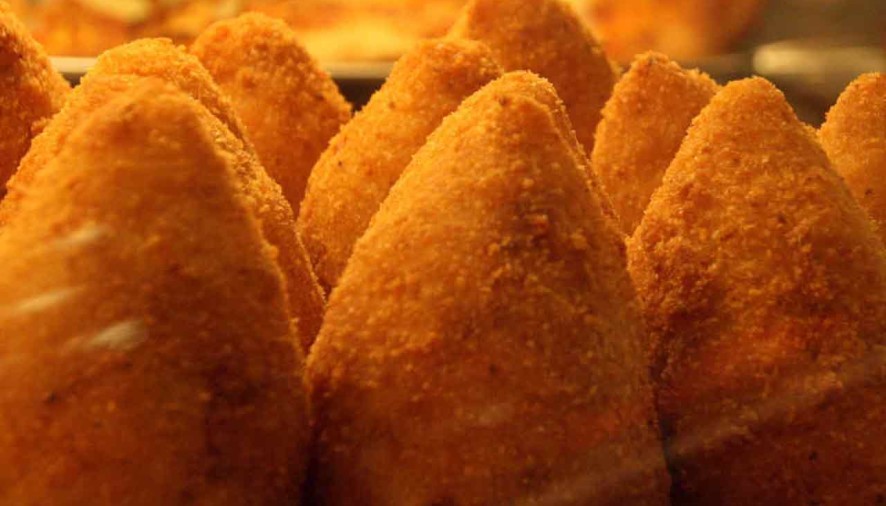
For many travellers, the first contact with Sicilian food is an arancina (or “arancino”, depending on where you are): compact rice, breaded and fried, that at the first bite reveals a filling which might be ragù, ham and mozzarella, pistachio, mushrooms or fish, according to the stall’s style and the city’s habits.

In the fry shops of Palermo and the nearby towns, the counter fills with panelle, thin slices of fried chickpea batter, and potato croquettes; they often end up together inside a soft roll, creating the kind of street food you really need two hands for, easily associated with a crowded square or a noisy market.

At the bakeries you may spot sfincione: a tall, soft base topped with tomato sauce, stewed onions, anchovies, oregano and caciocavallo cheese. It is not just a “different pizza” but a dish with its own story, born as simple food and still baked in large trays in neighbourhood ovens.

Moving across the island, the vocabulary changes: in Catania you will find “cipollina” and other rosticceria bites, puff‑pastry parcels filled with mozzarella, ham, onion and tomato, while at kiosks and village festivals it is common to come across sausage sandwiches, grilled stigghiole and other cuts cooked on the spot.

All these foods fit naturally into days full of sightseeing: they leave room for visits, do not require reservations and, at the same time, give you a chance to watch how people move around you – who works behind the counter, who always queues in the same place, who pops by just to collect “the usual”.

First and main courses: between home cooking and the sea

Among pasta dishes, pasta alla Norma is perhaps the one most often used to tell Sicily to someone who has never been: pasta with tomato sauce, fried aubergines, grated salted ricotta and basil, born in Catania but long since adopted on menus across the island.

Beside it, you will find dishes that speak of the sea and of cultural crossings, such as pasta con le sarde, where fresh sardines, wild fennel, pine nuts and raisins share the same plate, or couscous alla trapanese, with hand‑worked semolina served with fish broth, a reminder of how Mediterranean routes have shaped habits on the western coast.

In trattorias overlooking the water it is easy to find swordfish, tuna, Mazara del Vallo prawns and other local fish, often grilled or stewed, with simple side dishes oscillating between citrus salads, sweet‑and‑sour vegetables and roast potatoes.

On the vegetable side, caponata has a special place: fried aubergines, celery, onions, capers, olives and a sweet‑and‑sour sauce, served as a starter or side dish, with family and city variations that adjust proportions, add ingredients or play with sweetness.

Less in the spotlight but no less representative are dishes like macco di fave or soups with tenerumi and seasonal vegetables: recipes that are rarely “photogenic”, often kept in the domestic sphere, yet they tell the story of a Sicily you see less in shop windows and more in home kitchens.

Sicilian desserts: cannoli, cassata and granita for breakfast

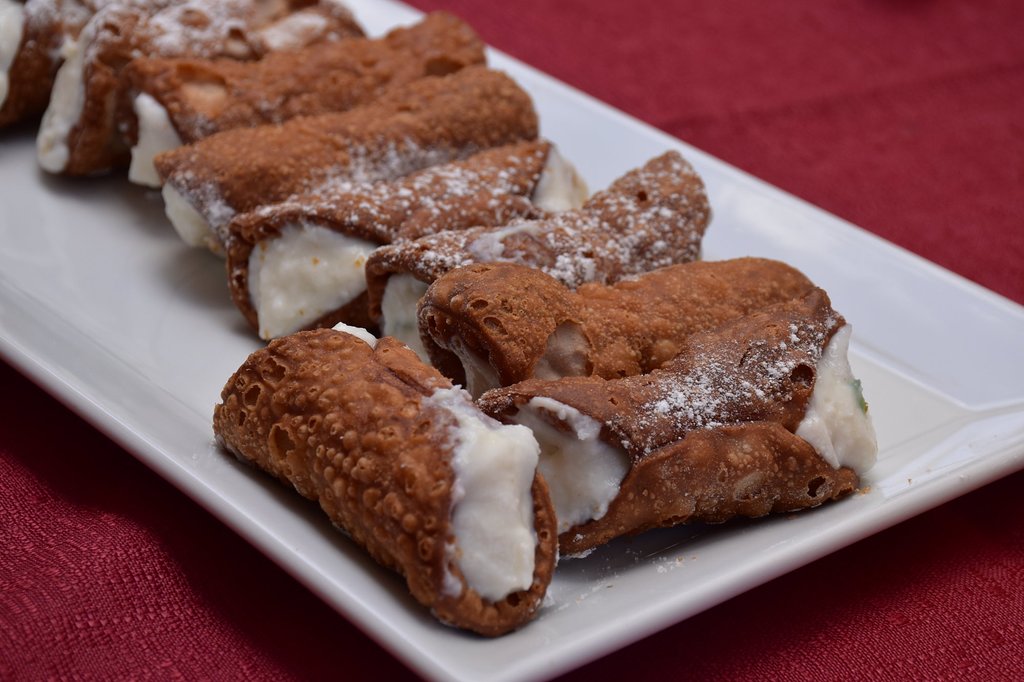
On the dessert side, the Sicilian cannolo almost always arrives first: a crisp fried shell that ideally should be filled at the last moment with sweetened sheep’s ricotta, often with a few chocolate chips, chopped pistachios or strips of orange peel, in proportions that change from one pastry shop to another.

Cassata is its more theatrical relative: sponge cake, ricotta, almond paste and a sugar glaze decorated with candied fruit, a cake born for feasts and celebrations and now found in many pastry shops even out of season, often in smaller or revisited versions.

When the heat sets in, especially on the eastern coast, breakfast changes rhythm and becomes granita with brioche: almond, pistachio, lemon, coffee or mulberry granitas served in cups or glasses, with a “brioche col tuppo” on the side, which many people use to scoop up the granita right to the last spoonful.

Completing the picture are almond pastries, frutta Martorana, gelo di mellone, biancomangiare and a long line of sweets linked to saints’ days and local festivities, from sfince di San Giuseppe to the “minnuzze” dedicated to Saint Agatha in Catania – desserts you are unlikely to come across all in one trip, but which make it clear how tightly pastry and calendar are intertwined here.

Over time, many travellers end up remembering towns and villages also because of a particular bar or pastry shop: a cannolo eaten standing at the counter, a granita deliberately sought out on the way back from an excursion, a box of mixed pastries bought “to taste a bit of everything” and then shared in the evening.

What to try at least once

When choosing among typical Sicilian dishes, everyone builds a personal list, but a handful of names almost always come up when you ask what should not be missed: arancine, pasta alla Norma, pasta con le sarde, couscous alla trapanese, caponata, sfincione, panelle, sarde a beccafico, grilled swordfish, Messina‑style involtini and Palermo‑style cutlets.

On the sweet side, the trio of cannoli, cassata and granita with brioche forms a solid core, joined by almond pastries and other desserts that are closely tied to specific provinces and their festivals, often discovered simply by stepping into a pastry shop and letting the counter suggest what to choose.

Rather than chasing a perfect checklist of “things to eat in Sicily”, it can be more meaningful to use these dishes as reference points and then leave room for what appears along the way: a bakery you stumble upon on the walk back from the beach, a kiosk that smells of charcoal, a bar that locals recommend without a second thought.

By the end of the trip, the memory of each place tends to be tied to a sequence of gestures: a granita made to last longer than planned, a piece of street food eaten while crossing a market, a plate of pasta arriving late in the evening when the day already felt over. Together, these details reveal a side of the island that never makes it onto postcards, but lives in the way people still cook and eat here.

vacanze in sicilia per giovani

Hello, I’m Iolanda, In 2010, I decided to return to my magical island, Sicily, so that the experience I had gained over the previous years could take shape in the place where I was born.
Escursioni in sicilia

Escursioni

VIVI LE PIU’ BELLE ESPERIENZE IN SICILIA, ABBIAMO SELEZIONATO PER VOI LE PIU’ BELLE ESCURSIONI PRESENTI IN SICILIA. 

Alloggi in Sicilia

Alloggi

CERCHI UN HOTEL DI LUSSO, CASALI ESCLUSIVI,  VILLA CON PISCINA O B&B? SCEGLI L’ALLOGGIO PIU’ ADATTO A TE

noleggio auto sicilia

Noleggio auto

IL NOLEGGIO DI UN’AUTOMOBILE IN SICILIA È IL MODO MIGLIORE PER SCOPRIRE LE PRINCIPALI BELLEZZE DELLA REGIONE SENZA ALCUN VINCOLO

noleggio scooter sicilia

Noleggio scooter

NOLEGGIARE UNO SCOOTER IN SICILIA PERMETTE DI VIVERE UN’ESPERIENZA UNICA, UNA VACANZA RICCA DI RICORDI

valle dei templi
Cefalù: what to see in one day between sea, stone and Norman memory

Cefalù: what to see in one day between sea, stone and Norman memory

Cefalù in One Day: What to See Between Sea, History and Norman Heritage

Cefalù has a rare quality: it manages to balance its seaside identity with its historical depth without one overshadowing the other. It is neither just a town overlooking the Tyrrhenian Sea nor merely a monumental village to be admired with your eyes fixed upwards. It is a place built on equilibrium, where the sea enters the city and the city leans against the rock behind it, creating a compact, legible and remarkably harmonious landscape.

One day is enough to grasp its essence, provided you are willing to respect its pace and move slowly. Cefalù is best experienced on foot, following a natural progression that leads from its monumental heart through the streets of the old town and down to the sea. There is no need to chase every detail; what matters is how architecture, landscape and everyday life are woven together.

The Cathedral as a starting point and a point of reference

Any visit to Cefalù should begin at its cathedral. Not out of obligation, but because the Duomo is the city’s true visual and symbolic anchor. Its austere façade, framed by two towers, immediately conveys the Norman imprint that has left a deep mark on this part of Sicily.

Built in the twelfth century at the behest of Roger II, the cathedral still retains a sense of solidity and authority that requires no excessive ornamentation. Stepping inside, you enter a measured space divided into three naves, where light and stone interact with restraint. The gold-ground mosaics, created by Byzantine masters, are far more than decoration: they form a theological and symbolic narrative that culminates in the powerful, immobile figure of Christ Pantocrator dominating the apse.

It is worth taking time to explore the less obvious areas as well: the cloister, quiet and enclosed, and the upper walkways, which offer a broader perspective on the city, suspended between sea and mountain.

Climbing towards the Rocca, where the city began

Behind the cathedral rises the Rocca, a constant and reassuring presence that accompanies every movement through Cefalù. More than a scenic backdrop, it is the place where the city first took shape. Walking up the paths that lead to the summit means gradually leaving the urban fabric behind and entering a more natural dimension, shaped by limestone rock, Mediterranean vegetation and silences broken only by the wind.

Along the way, traces of different eras emerge: cisterns, defensive structures, and remnants of a layered past that reveal how this site was inhabited, protected and transformed over time. From the top, the view opens decisively. Cefalù appears as a compact organism, with the cathedral standing out as a fixed point, while the sea draws a wide, luminous line on the horizon.

It is one of those places that instantly clarifies the city’s geography and its strategic position, highlighting its deep relationship with the surrounding territory.

The sea as urban space: Capo Marchiafava

Descending again towards the centre, the sea returns to the foreground. Capo Marchiafava is one of the points where the bond between city and water becomes most evident. Defensive structures here speak of a past when the coastline had to be guarded, yet today the bastion functions as a natural terrace overlooking a Tyrrhenian Sea that shifts in colour throughout the day.

Climbing down towards the rocks, getting closer to the water and observing the city from a lateral angle allows you to see Cefalù in a more intimate, less iconic way. It is a place that invites pause, contemplation and a slower form of enjoyment.

Walking through the historic centre without a fixed destination

Cefalù’s historic centre does not demand a detailed map. It is enough to follow the main street, allow yourself to be drawn into side alleys, and observe the façades of palaces and churches that suddenly appear between houses. Corso Ruggero forms the backbone of this urban fabric, an axis that concentrates daily life, shops, historic buildings and symbolic thresholds.

Porta Pescara, with its arch framing the sea, is one of those moments when the city seems to pause, offering a view that stays with you. Nearby, the old harbour and the small squares facing the water become natural stopping points, where time appears to stretch. Those wishing to add a more explicitly cultural dimension can visit the Mandralisca Museum, whose collections narrate the complexity of Cefalù’s history through archaeological finds, artworks and testimonies that reach far beyond a purely local perspective.

The medieval washhouse, between legend and everyday life

One of Cefalù’s most distinctive places is the medieval washhouse. It does not impress through grandeur, but through its ability to tell the story of daily life in another age. The stone basins, fed by water emerging directly from the rock, speak of gestures repeated for centuries and of a city shaped around precise natural resources.

The legend that attributes these waters to the tears of a desperate nymph adds a narrative layer, yet it is the physical reality of the place that makes it compelling: the sound of flowing water, its constant presence, the proximity to the sea. Here, Cefalù reveals one of its most authentic sides, far removed from postcard imagery.

Time by the sea: the Old Harbour and the seafront

In the afternoon, as the light softens, the sea becomes the natural conclusion of the day. The Old Harbour beach is small, intimate and lived-in. Fishermen, residents and visitors share the space in a balance that reflects a town still deeply connected to its everyday rhythms.

Walking along the pier, observing the houses that lean towards the water and following the line of the seafront offers a more relaxed view of Cefalù, one less focused on monuments and more attentive to the relationship between urban space and the coastal landscape.

Sitting at the table as a cultural gesture

A day in Cefalù would be incomplete without time devoted to food. Here, cuisine is not an accessory but an integral part of the experience. Traditional dishes tell the story of a Sicily built on contrasts and harmonies, with simple ingredients, time-honoured preparations and clear, decisive flavours.

Sitting in the square, perhaps directly in front of the cathedral, means taking part in a daily ritual shared by locals and visitors alike. A brioche filled with gelato, eaten slowly while watching life pass by, becomes more than a sweet break: it is a way of tuning into the city’s rhythm.

Cefalù, a successful synthesis

Cefalù succeeds where many destinations struggle: it offers richness without dispersion. In a single day, it is possible to experience its different layers, from Norman monumentality to natural landscape, from the historic centre to the sea. There is no need to rush or accumulate stops. It is enough to follow the city, guided by its compact form and by the continuous dialogue between stone, water and light.

It is this deep coherence, more than the sum of individual sights, that makes Cefalù one of the most accomplished destinations on Sicily’s northern coast.

Hello, I’m Iolanda, In 2010, I decided to return to my magical island, Sicily, so that the experience I had gained over the previous years could take shape in the place where I was born.

Escursioni in sicilia

Escursioni

VIVI LE PIU’ BELLE ESPERIENZE IN SICILIA, ABBIAMO SELEZIONATO PER VOI LE PIU’ BELLE ESCURSIONI PRESENTI IN SICILIA. 

Alloggi in Sicilia

Alloggi

CERCHI UN HOTEL DI LUSSO, CASALI ESCLUSIVI,  VILLA CON PISCINA O B&B? SCEGLI L’ALLOGGIO PIU’ ADATTO A TE

noleggio auto sicilia

Noleggio auto

IL NOLEGGIO DI UN’AUTOMOBILE IN SICILIA È IL MODO MIGLIORE PER SCOPRIRE LE PRINCIPALI BELLEZZE DELLA REGIONE SENZA ALCUN VINCOLO

noleggio scooter sicilia

Noleggio scooter

NOLEGGIARE UNO SCOOTER IN SICILIA PERMETTE DI VIVERE UN’ESPERIENZA UNICA, UNA VACANZA RICCA DI RICORDI

valle dei templi
What to see and do in Ragusa: a walking journey through architecture, memory and the urban landscape

What to see and do in Ragusa: a walking journey through architecture, memory and the urban landscape

What to see and do in Ragusa: a walking journey through architecture, memory and the urban landscape

Un racconto che ti porta a scoprire la bellezza di Ragusa a piedi tra le sue strade! 

Ragusa isn’t the kind of city that offers instant gratification in the way some Sicilian destinations do, built around a single dramatic “wow” moment. It asks for time, attention, and a willingness to walk and truly look. In return, it gives you one of the island’s most intricate and compelling urban fabrics, where the Baroque reconstruction that followed the seventeenth-century earthquake lives alongside medieval traces, nineteenth-century additions, and viewpoints that shift with every change in elevation.

The best way to get to know it is on foot, letting the city itself set the pace and the route. Ragusa unfolds like a two-part body: the upper town, rebuilt after the disaster, and the older city, Ragusa Ibla, lying lower down, compact and deeply layered. The difference between the two isn’t merely topographical; it’s a change of rhythm, of visual density, and even of silence.

The monumental face of Upper Ragusa

A natural starting point is the higher Ragusa, often described today as the “modern” centre, even though it is anything but modern. Here the city opens up: perspectives widen, streets breathe, and architecture takes on a more formal, ceremonial character.

The Cathedral of Saint John the Baptist dominates this part of the city with a presence that is not only religious but also urbanistic. The raised parvis, the articulated façade, the bell tower that balances the overall composition: everything conveys the sense of a city that, after destruction, chose to rebuild itself with order and ambition.

A short walk away you’ll encounter other buildings that speak to the institutional and cultural role this area has played over time. Churches, civic palaces, and theatres—quiet today, yet once central to local life—form a coherent system in which Baroque language converses with Neoclassical insertions and early twentieth-century architecture. Walking here means moving through a city that has long possessed a strong awareness of itself, expressed through imposing and representative public buildings.

Palaces and façades as a social narrative

Continuing along the main streets, the urban texture grows denser and noble palaces begin to emerge, often facing roads that are busy now but were originally conceived as avenues of display. Balconies supported by sculpted brackets, masks that are ironic or grotesque, coats of arms belonging to aristocratic families that seem to have watched passers-by for centuries.

These buildings portray a stratified society, one in which power also spoke through architecture. The faces carved beneath the balconies—sometimes caricatured, sometimes unsettling—belong to a Baroque culture capable of mixing sacred and profane, irony and ostentation, spirituality and theatricality.

Discovering the lower part of the city

As you descend towards the lower town, the urban landscape shifts gradually. Streets narrow, sightlines break apart, and churches appear almost unexpectedly along stairways and sudden little squares. It is in this transition that Ragusa reveals one of its most captivating qualities: its ability to turn changes in elevation into narrative.

Ancient churches, rebuilt more than once over the centuries, preserve traces of different eras within their interiors, as if time had never been fully erased, simply layered. Here the stone tells a story that is less orderly and more complex, shaped by adjustments, expansions, and transformations driven by population growth and the city’s evolving needs.

Ragusa Ibla, the enclosed city

Arriving in Ragusa Ibla means stepping into a different urban dimension. The old town appears compact, almost gathered into itself, with a layout that follows the natural contours of the land. Streets don’t aim for straight lines; they bend, climb, and drop, creating a succession of continuous, unexpected views.

Here the noble palaces feel closer, more intimate, while still displaying extraordinary decorative richness. Stone balconies are held up by anthropomorphic figures, fantastic animals, and symbols of abundance and protection. Each building carries a family story, often linked to names that recur throughout the city’s history.

Piazza Duomo as a symbolic centre

The heart of Ragusa Ibla is Piazza Duomo, an elongated space that functions as both visual and social hub. Here the city opens out, offering benches, cafés, and places to pause. It is a square to inhabit slowly, watching people pass, noticing the way light changes on façades, and observing the constant dialogue between architecture and everyday life.

The Cathedral of Saint George presides over the square with a striking architectural stage-set. The façade, conceived as a vertical structure that draws the eye upwards, engages with the staircase and the entire urban setting. Stepping inside is a shift from a strongly theatrical exterior to a more contained interior, articulated by powerful pillars and a dome that becomes the focal point of the whole building.

Meeting places and cultural memory

Alongside its religious architecture, Ragusa Ibla preserves civic spaces that tell the story of nineteenth-century social life. Old clubs, palaces designed for conversation, frescoed rooms intended for meetings, games, reading—settings that speak of an educated aristocratic society, keen to distinguish itself yet also intent on creating reserved places for gathering.

These spaces, often still open to visitors, offer a clear sense of how the city lived itself, not only through religion and power, but also through leisure, culture and dialogue.

Noble residences and private life

Some of Ragusa Ibla’s most important palaces still open their doors today, allowing you to move through salons, staircases and inner courtyards that preserve original furnishings, floors and decorative elements.

Visiting these residences lets you enter the city’s private dimension and see how aristocratic families shaped spaces for representation as well as daily life. Frescoed ceilings, hand-painted majolica tiles, and a sequence of rooms unfolding one after another speak of a way of living in which beauty and family continuity were central values.

Ragusa, a city to uncover

Visiting Ragusa means walking a great deal, climbing and descending, and stopping often—because the city deserves it. It reveals itself through details, glimpses, silences and sudden panoramic openings. If you have time, you can complete the experience by reaching the panoramic viewpoints outside the centre, where the city’s “saddle” shape becomes evident and offers a broader understanding of this extraordinary urban organism.


Hello, I’m Iolanda, In 2010, I decided to return to my magical island, Sicily, so that the experience I had gained over the previous years could take shape in the place where I was born.

Escursioni in sicilia

Escursioni

VIVI LE PIU’ BELLE ESPERIENZE IN SICILIA, ABBIAMO SELEZIONATO PER VOI LE PIU’ BELLE ESCURSIONI PRESENTI IN SICILIA. 

Alloggi in Sicilia

Alloggi

CERCHI UN HOTEL DI LUSSO, CASALI ESCLUSIVI,  VILLA CON PISCINA O B&B? SCEGLI L’ALLOGGIO PIU’ ADATTO A TE

noleggio auto sicilia

Noleggio auto

IL NOLEGGIO DI UN’AUTOMOBILE IN SICILIA È IL MODO MIGLIORE PER SCOPRIRE LE PRINCIPALI BELLEZZE DELLA REGIONE SENZA ALCUN VINCOLO

noleggio scooter sicilia

Noleggio scooter

NOLEGGIARE UNO SCOOTER IN SICILIA PERMETTE DI VIVERE UN’ESPERIENZA UNICA, UNA VACANZA RICCA DI RICORDI

valle dei templi
Ancient Theatre of Taormina: History and Architecture of a Symbol

Ancient Theatre of Taormina: History and Architecture of a Symbol

Ancient Theatre of Taormina: History and Architecture of a Symbol

Discover the long history of the famous Ancient Theatre of Taormina!

The Ancient Theatre of Taormina remains one of the city’s main attractions even today. It was built by the Greeks around the 3rd century BC, probably during the period when Syracuse dominated much of eastern Sicily. The location was not chosen by chance: the mountain provided a natural slope ideal for the cavea and offered a breathtaking view that, then as now, leaves visitors speechless. In the background, the sea of Naxos and Mount Etna seem to merge with the stage on clear days, creating a scene of rare beauty.

A sacred space

The theatre was a sacred place, dedicated to the dialogue between humankind and destiny, where the chorus and the actors represented human conflicts and passions. The tiers, carved directly into the rock, welcomed the entire community in a collective act of sharing. There was no true boundary between audience and stage – the whole city took part in the same ritual.

The Roman age

When Rome took control of Sicily, the theatre was almost entirely rebuilt between the 1st century BC and the 1st century AD. The Romans expanded its capacity, added monumental columns and arches, and replaced part of the local stone with imported marble.

The semicircular structure, typical of Greek theatres, was preserved, but its purpose changed: alongside dramatic performances, games and combats were introduced.

The building, which today appears as a perfect hybrid of Hellenic elegance and Roman grandeur, could accommodate up to ten thousand spectators. It was both a display of power and civilization, and a way to preserve Taormina’s long-standing cultural vocation—this has always been a city devoted to art and contemplation.

Architecture and acoustics

The cavea measures over one hundred meters in diameter, and many of the original steps remain intact, arranged to ensure a perfect view from every seat. At the center lies the orchestra, the semicircular space between the stage and the first rows, where traces of the original brick floor and the ancient drainage channel are still visible.

The acoustics are one of the theatre’s marvels: a person speaking at the center of the stage can be heard clearly from the very top. This effect was achieved without instruments, purely through the ancient builders’ mastery of stone and sound. Every word seems to resonate as though the theatre itself still has its own voice.

Behind the stage, the remains of the frons scaenae—the scenic façade once decorated with columns and statues—are still recognizable. The niches, now empty, probably held images of deities and emperors. Looking at them, one can imagine the splendor that once characterized this space during the Roman era, when Taormina was a favorite destination among aristocrats.

A view you never forget

It’s nearly impossible to describe the view from the theatre without surrendering to emotion. In front, the sea opens like a sheet of silver; behind, Mount Etna towers with its silent presence. The light constantly changes, and with it the color of the stones.

Goethe, during his journey through Sicily, wrote that the Theatre of Taormina offered “the greatest stage in the world.” He was right: nature itself serves as the backdrop, and no human artifice could ever equal it.

Those who visit the site in the quiet hours—early morning or at sunset—can feel a rare sense of balance. It’s as if the ancient and the present coexist within the same frame, without disturbing each other.

Decline and rediscovery

After the fall of the Roman Empire, the theatre was abandoned. Its stones were used to build houses, towers, and even churches. For centuries, it lay forgotten, swallowed by silence. Only between the 18th and 19th centuries, with renewed interest in archaeology and travel through Sicily, was it brought back to light.

The drawings of Jean-Pierre Houel and the accounts of Grand Tour travelers contributed to its rediscovery. Goethe visited it in 1787 and made it famous throughout Europe. Since then, the Theatre of Taormina has once again become a source of inspiration for artists and scholars, eventually turning into one of the Mediterranean’s most iconic landmarks.

The theatre today

Today, the Ancient Theatre of Taormina is one of the most visited archaeological sites in Italy and a key venue in Sicily’s cultural life. During summer, its steps fill with audiences for concerts, plays, opera performances, and the Taormina Film Fest, which attracts international artists.

Experiencing a performance at sunset, with the silhouette of Etna in the background, leaves an indelible mark. Every note and every word intertwines with the breath of the stone and the sea breeze rising from below.

Details and curiosities

Many visitors are intrigued by the small cavities carved into the scenic walls. These once held marble statues of deities or emperors, most of which were looted or destroyed over the centuries. Some fragments, now preserved in the Archaeological Museum of Taormina, allow us to imagine the theatre’s original appearance.

Not far from the theatre stand the remains of a small sanctuary dedicated to Aphrodite. Its presence confirms the link between performance and spirituality: for the Greeks, theatre was a form of worship—a way to honor the gods through word and gesture.

Although it is commonly called the “Greek Theatre,” most of what we see today dates back to the Roman period. Yet the basic structure and the layout of the cavea still retain the Hellenic design, and the Greek soul of the site continues to prevail.

The Ancient Theatre of Taormina remains a living place, where time mingles with the voices of visitors and the music of the performances that, every summer, bring it back to life.

come visitare l'Etna

Hello, I’m Iolanda, In 2010, I decided to return to my magical island, Sicily, so that the experience I had gained over the previous years could take shape in the place where I was born.

Escursioni in sicilia

Escursioni

VIVI LE PIU’ BELLE ESPERIENZE IN SICILIA, ABBIAMO SELEZIONATO PER VOI LE PIU’ BELLE ESCURSIONI PRESENTI IN SICILIA. 

Alloggi in Sicilia

Alloggi

CERCHI UN HOTEL DI LUSSO, CASALI ESCLUSIVI,  VILLA CON PISCINA O B&B? SCEGLI L’ALLOGGIO PIU’ ADATTO A TE

noleggio auto sicilia

Noleggio auto

IL NOLEGGIO DI UN’AUTOMOBILE IN SICILIA È IL MODO MIGLIORE PER SCOPRIRE LE PRINCIPALI BELLEZZE DELLA REGIONE SENZA ALCUN VINCOLO

noleggio scooter sicilia

Noleggio scooter

NOLEGGIARE UNO SCOOTER IN SICILIA PERMETTE DI VIVERE UN’ESPERIENZA UNICA, UNA VACANZA RICCA DI RICORDI

Neighborhoods of Palermo: Which Are the Most Iconic to Visit

Neighborhoods of Palermo: Which Are the Most Iconic to Visit

Neighborhoods of Palermo: Which Are the Most Iconic to Visit

Palermo, una delle città più iconiche della Sicilia! Scopri con noi i suoi quartieri più belli.

The neighborhoods of Palermo each have their own distinct charm. Walking through them step by step—like reading a story you don’t want to end—reveals how every district has a different voice: some whisper, some shout, some smell of the sea, others of the market.

The historic center

Palermo’s historic center is vast and full of surprises. It begins at the Quattro Canti, the crossroads that divides the city into four districts: Kalsa, Albergheria, Capo, and La Loggia. From there, you can walk in any direction and always stumble upon something unexpected.

The Cathedral rises like a mosaic of styles, its façade changing color with the light. Inside, the tombs of the Norman kings remind us that Sicily was once an island of rulers and conquerors. Just a short walk away, the Palazzo dei Normanni and the Palatine Chapel tell the same story through gold and stone—a masterpiece among Europe’s most beautiful sites, still capable of astonishing those who see it for the first time.

Kalsa

Kalsa is a maze of alleys and balconies, a district that smells of the sea and of history. Its name comes from the Arabic al-Khalisa, meaning “the pure” or “the chosen one.” The walls may have lost their ancient splendor, but they’ve gained life—murals, courtyards with plastic chairs, cats crossing the streets with the calm confidence of those who belong there.

Photography lovers should stop at Piazza Marina, beneath the enormous branches of the ficus in Villa Garibaldi, or in the courtyard of Palazzo Butera, where art and architecture meet effortlessly. In the evening, Kalsa changes rhythm: music fills the air, tables appear outdoors, glasses clink. This is Palermo at night—vibrant, social, and unhurried, the same city that, by morning, pauses to chat over a coffee.

Ballarò and Albergheria

If you want to feel Palermo’s heartbeat, go to Ballarò. No guide is needed—just follow the sound. The market begins at dawn and lasts until late afternoon. Fish, fruit, vegetables, voices, laughter, and the smell of fried food form a wonderful chaos that binds centuries of tradition.

Right next to it lies Albergheria, home to one of Sicily’s richest Baroque churches, Casa Professa, where marble seems to ripple like waves. Then there’s Piazza Bellini, with San Cataldo and La Martorana—red domes, golden mosaics, and that rare silence only certain places can preserve amid the city’s noise.

Il Capo

Behind the Teatro Massimo, where the sound of opera still lingers, spreads the Capo district. Its narrow streets are filled with colors and awnings fluttering between market stalls. Here stands the Church of the Immacolata Concezione, a hidden treasure behind a modest façade. Inside, inlaid marble creates a play of light and shadow that mesmerizes. Capo is the neighborhood of popular devotion: during the Feast of Santa Rosalia, the city’s patron saint, its streets turn into a river of people, music, and prayer.

La Loggia and the Vucciria

Heading toward the sea, you enter La Loggia, once home to merchants and nobles. Among its alleys survives La Vucciria, no longer the bustling market it once was but still a place full of life. Quiet by day, lively by night, it’s filled with voices, guitars, and dishes of panelle and sfincione. This is Palermo that never sleeps, reinventing itself with every generation. The neighborhood maintains an untidy, authentic charm—the kind of beauty that defies order. 

Mondello and Monte Pellegrino

When the city center becomes overwhelming, just take a bus, and in half an hour you’ll reach Mondello. White sand, crystal-clear water, and Liberty-style villas recall a time when summer meant elegance and leisure. The seaside pavilion, with its columns reflected in the sea, is one of the great symbols of 20th-century Palermo.

Behind it rises Monte Pellegrino, the mountain Goethe called “the most beautiful promontory in the world.” At its summit stands the Sanctuary of Santa Rosalia, carved into the rock, overlooking a panorama that embraces the whole city. When the sun sets behind the mountains, Palermo turns orange and quiet.

A city that can’t be explained

Every neighborhood in Palermo tells a different chapter of the same story: Kalsa with its elegant melancholy, Ballarò with its untamed energy, Capo with its devotion and festivity, La Loggia with its long nights, and Mondello with its sea breeze. There’s no better route than another—Palermo isn’t meant for perfect itineraries. It’s meant for those who want to be surprised.

Hello, I’m Iolanda, In 2010, I decided to return to my magical island, Sicily, so that the experience I had gained over the previous years could take shape in the place where I was born.

Escursioni in sicilia

Escursioni

VIVI LE PIU’ BELLE ESPERIENZE IN SICILIA, ABBIAMO SELEZIONATO PER VOI LE PIU’ BELLE ESCURSIONI PRESENTI IN SICILIA. 

Alloggi in Sicilia

Alloggi

CERCHI UN HOTEL DI LUSSO, CASALI ESCLUSIVI,  VILLA CON PISCINA O B&B? SCEGLI L’ALLOGGIO PIU’ ADATTO A TE

noleggio auto sicilia

Noleggio auto

IL NOLEGGIO DI UN’AUTOMOBILE IN SICILIA È IL MODO MIGLIORE PER SCOPRIRE LE PRINCIPALI BELLEZZE DELLA REGIONE SENZA ALCUN VINCOLO

noleggio scooter sicilia

Noleggio scooter

NOLEGGIARE UNO SCOOTER IN SICILIA PERMETTE DI VIVERE UN’ESPERIENZA UNICA, UNA VACANZA RICCA DI RICORDI

Aeolian Islands: What to See and the Most Beautiful Attractions of the Archipelago

Aeolian Islands: What to See and the Most Beautiful Attractions of the Archipelago

Aeolian Islands, What to See and the Most Beautiful Attractions of the Archipelago

What to See and the Most Beautiful Attractions of the Archipelago

Visiting the Aeolian Islands means discovering a landscape unlike any other place in the Mediterranean, where volcanic forces coexist with quiet villages, sharply carved bays and paths overlooking a sea that shifts in colour depending on the hour of the day. These islands never reveal themselves all at once, because each one preserves a distinct character and its own rhythm, and the only way to truly appreciate them is to let yourself be guided by what each has to offer, without forcing expectations.

Lipari

Arriving in Lipari means finding a lively and orderly town that still carries the atmosphere of an authentic maritime community, with its small shops, squares where time seems to stretch out, and the harbour that sets the pace of the day. It is the most populated island of the archipelago and, for this reason, the one that offers the first broad perspective on the Aeolians.

The Lipari Castle dominates the town, and anyone who climbs up finds themselves inside a system of walls, terraces and ancient fortifications that recount centuries of different dominations. Inside lie the Aeolian Archaeological Museum and the Cathedral of San Bartolomeo, a combination that helps one understand how deeply the island’s history is intertwined with that of the entire Mediterranean.

After the visit, it is worth heading to the north-eastern coast, where the pumice quarries create a white, jagged, almost lunar landscape that plunges into extraordinarily clear water. It’s not unusual to see people linger for hours along those natural slopes, simply to enjoy the contrast between the brilliant stone and the deep blue of the sea. The beaches and coves nearby, such as Acquacalda or Porticello, offer views that are as simple as they are unforgettable.

Salina

Salina can be recognised from afar thanks to its two extinct volcanoes, Monte Fossa delle Felci and Monte dei Porri, which create a soft, harmonious skyline. It is the greenest island in the archipelago, protected by an unhurried pace that it maintains without pretence.

Those who enjoy walking will find here one of the most fascinating trails of the Aeolian Islands: the ascent to Fossa delle Felci crosses cool woodland filled with ferns, chestnut trees and the scents of the undergrowth, with sudden glimpses of the other islands. The climb requires some stamina, but it rewards hikers with a sweeping view suspended between sky and sea.

The village of Santa Marina, with its low houses and carefully curated shops, invites unhurried pauses, perhaps to enjoy a granita prepared in the traditional way or a slice of pane cunzato. Pollara, instead, changes the tone: here you stand before a natural amphitheatre carved by wind and sea, where the light at sunset seems to have a different quality, denser, as if the sun took a few extra seconds before sinking behind the horizon.

Vulcano

Vulcano presents itself without half-measures: the smell of sulphur, vapours emerging from the ground, dark sand and a primordial appearance that captivates anyone even remotely curious about natural phenomena. The climb to the Fossa Crater is an experience that stays with you. The path is straightforward, at times exposed, and leads to a crater rim where the ground is warm and the colours shift constantly, from yellow to red to metallic tones. From the top, the view of Lipari unfolds gradually as you approach the summit.

The black beaches, such as the Spiaggia di Ponente, have a special allure in the early morning when the sun lights up the dark sand and the sea seems calmer. Those who enjoy coastal walks can reach the Valley of the Monsters, an area where ancient lava flows created unusual shapes that each visitor can interpret as they wish.

Stromboli

Stromboli represents the most elemental soul of the archipelago, where the presence of the volcano is not just part of the landscape but a constant companion—sometimes loud, other times silent. The village is a weave of white alleys, bougainvillea and terraces overlooking a sea that appears deeper than elsewhere.

Climbing toward the panoramic points overlooking the Sciara del Fuoco offers an intense experience, because you feel the volcano’s vibration and watch its glowing bursts that mark its breath. It is not a climb to underestimate, but those who undertake it carry with them a vivid memory that is difficult to compare to anything else.

In the evening, when everything becomes quieter, the boats approaching the Sciara provide an exceptional viewpoint: seeing the incandescent fragments fall into the sea is a moment many travellers describe as one of the most moving experiences of their lives.

Panarea

Among all the Aeolian Islands, Panarea is perhaps the one that most suggests an idea of care and lightness, with its white houses framed by colourful doors, hidden gardens and an atmosphere that manages to feel refined without losing its gentle character. Walking through its alleys, you often sense that every detail has been chosen with particular attention.

The small coves reachable on foot or by boat offer crystal-clear water and a tranquillity that becomes more evident once you move away from the port. The nearby islet of Basiluzzo offers one of the most beautiful swims of the entire archipelago, with pale seabeds and an almost theatrical backdrop.

Filicudi and Alicudi

Those seeking a direct encounter with almost untouched nature find in Filicudi and Alicudi two destinations that preserve a rhythm difficult to encounter elsewhere. In Filicudi, you walk among ancient paths, dense Mediterranean scrub and archaeological remains that tell of very early settlements. La Canna, the imposing sea stack rising from the water, is one of the island’s symbols.

Alicudi, instead, feels like a separate world. The houses are connected by mule tracks that climb the mountain, and time seems to flow with a slowness that invites a change of pace, a quieting of inner noise, and an acceptance of a simple way of life supported by the raw beauty of the landscape.

Hello, I’m Iolanda, In 2010, I decided to return to my magical island, Sicily, so that the experience I had gained over the previous years could take shape in the place where I was born.

Escursioni in sicilia

Escursioni

VIVI LE PIU’ BELLE ESPERIENZE IN SICILIA, ABBIAMO SELEZIONATO PER VOI LE PIU’ BELLE ESCURSIONI PRESENTI IN SICILIA. 

Alloggi in Sicilia

Alloggi

CERCHI UN HOTEL DI LUSSO, CASALI ESCLUSIVI,  VILLA CON PISCINA O B&B? SCEGLI L’ALLOGGIO PIU’ ADATTO A TE

noleggio auto sicilia

Noleggio auto

IL NOLEGGIO DI UN’AUTOMOBILE IN SICILIA È IL MODO MIGLIORE PER SCOPRIRE LE PRINCIPALI BELLEZZE DELLA REGIONE SENZA ALCUN VINCOLO

noleggio scooter sicilia

Noleggio scooter

NOLEGGIARE UNO SCOOTER IN SICILIA PERMETTE DI VIVERE UN’ESPERIENZA UNICA, UNA VACANZA RICCA DI RICORDI

Isole Eolie cosa vedere